About the artist
Adriana Diderika van Houweninge (1890–1953) was a Dutch painter and draughtswoman who lived and worked in Nijmegen. Active in the first half of the twentieth century, she developed a modest yet dedicated artistic practice, producing a substantial body of paintings and works on paper that reflect a careful, observant engagement with her surroundings.
Van Houweninge’s oeuvre consists largely of intimate subjects—landscapes, still lifes, and everyday scenes—rendered with a restrained sensitivity to light, atmosphere, and composition. Her draughtsmanship reveals a disciplined hand, with sketches and studies that suggest a continuous process of looking and refining rather than seeking overt stylistic innovation. While she worked during a period of rapid artistic change in Europe, her work appears to remain grounded in a more traditional, attentive mode of representation.
Despite the consistency and volume of her output, Van Houweninge did not achieve widespread recognition during her lifetime, nor has her name featured prominently in canonical accounts of Dutch modern art. This relative obscurity, however, lends her work a certain quiet autonomy: it stands less as part of a broader movement and more as the result of a sustained, personal commitment to artistic practice.
Today, her work can be appreciated for its sincerity and its focus on the immediate and the familiar. In revisiting artists like Van Houweninge, a more nuanced and inclusive picture of early twentieth-century Dutch art begins to emerge—one that acknowledges not only its leading figures, but also those who worked with equal dedication beyond the spotlight.
Artworks
Filter Artworks
1 artwork for sale by Adriana Diderika van Houweninge

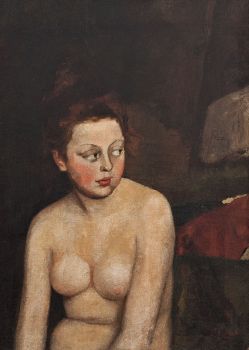
Adriana Diderika van Houweninge
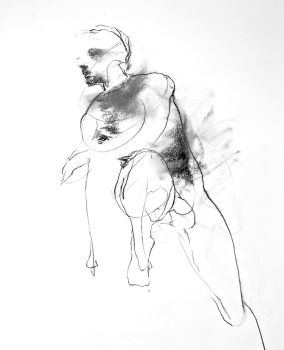
Study of a Standing Female Nude1910 - 1930
Price on requestVan der Aalst Fine Art
Related artworks for sale

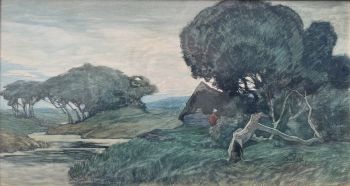
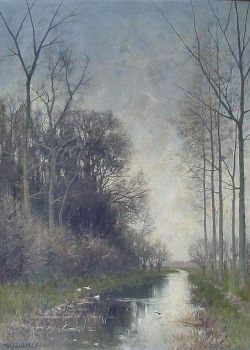
Willem George Frederik Jansen
Rivierlandschap1871 - 1949
Price on requestPrivate Collection Classic Arts


Gijsbertus Jan Sijthoff
Interior scene with a woman doing needlework1890 - 1920
Price on requestVan der Aalst Fine Art


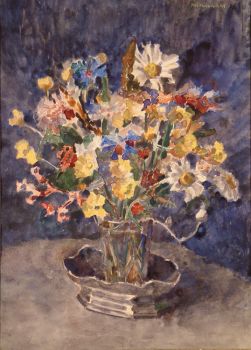
Rudolf de Bruyn Ouboter
Flower vase in a silver contoured tray1940 - 1950
Price on requestAdelwein Kunst