About the artist
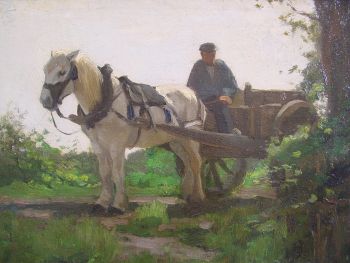
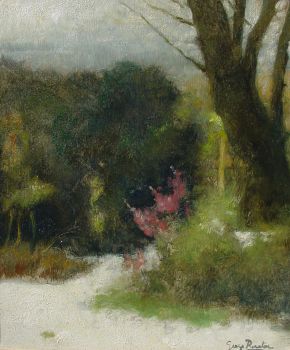
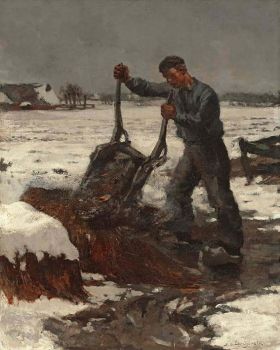
Hendrik Johannes (H.J.) van der Weele (Middelburg, 1852 – The Hague, 1930) was a Dutch painter and draughtsman who is considered to belong to the second generation of the Hague School. His work is characterized by a warm, impressionistic touch and a sincere interest in rural life. With his depictions of shepherds, farmers, sheep and heathland landscapes, Van der Weele built up an oeuvre that is both sensitive and technically refined.
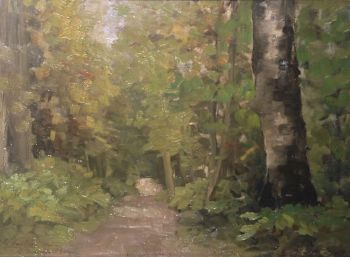
Initially he worked as an engineer for the railways, but his calling lay in art. He studied at the Royal Academy of Art in The Hague and was taught by Johannes Bosboom, among others. He quickly developed a style in which light, atmosphere and everyday rural life were central. He worked a lot in the area around Ede, where the heathland, forests and farms continued to inspire him.
Van der Weele’s work shows affinities with that of Anton Mauve — also a master of sheep in the landscape — but is often somewhat looser in touch and warmer in colour. His paintings radiate a quiet melancholy, a dignified tranquility in which man and nature come together in harmony. Sheep herders, field workers and children in the fields are recurring motifs.
He exhibited regularly and enjoyed considerable appreciation in his time, both in the Netherlands and abroad. His work can be found in the collections of the Rijksmuseum and the Gemeentemuseum Den Haag, among others.
H.J. van der Weele left behind a modest, poetic oeuvre that casts a loving gaze on Dutch rural life at the end of the 19th and the beginning of the 20th century. His paintings are silent witnesses to a world in which simplicity, labour and nature were central.
Artworks
Filter Artworks
2 artworks for sale by H.J. van der Weele