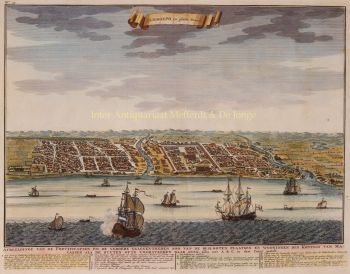
Banten (Bantam)  by Francois Valentijn
Scroll to zoom, click for slideshow

Banten (Bantam) 1724

Francois Valentijn

€ 295

Inter-Antiquariaat Mefferdt & De Jonge

  • About the artwork
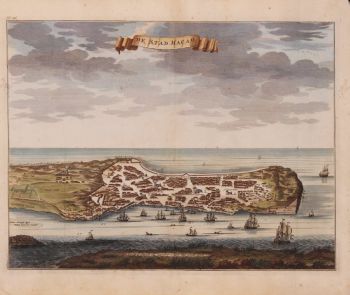
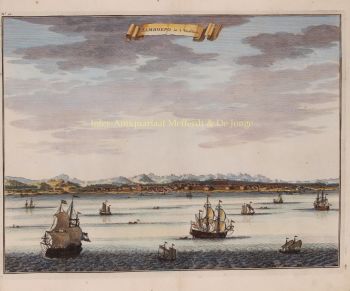
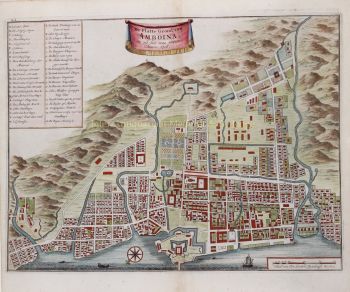
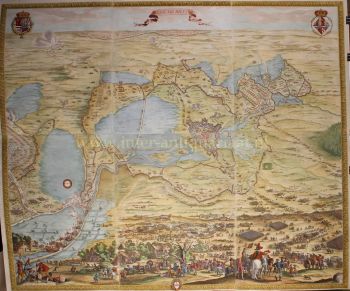
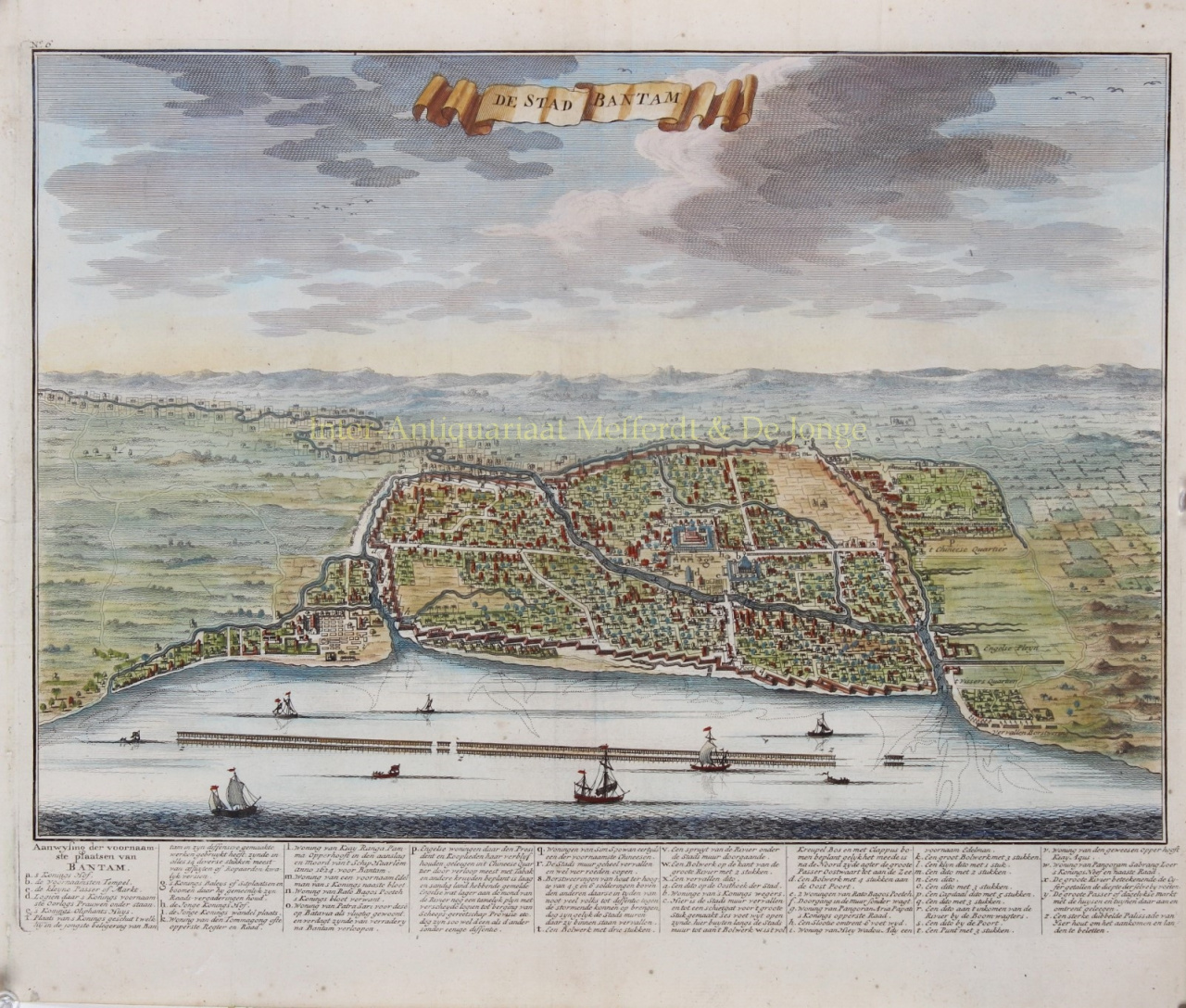
    “De Stad Bantam”, uit François Valentijn’s “Oud en Nieuw Oost-Indien”, vervaardigd door Jan van Braam en uitgegeven te Dordrecht door Gerard onder de Linden in 1724-1726. Later met de hand gekleurd. Afm.: 40 x 31 cm. Bantam was rond 1600 de belangrijkste havenstad van Java. Het was de eerste haven van de Indische archipel die door Nederlanders werd aangedaan. De koning van Bantam genoot geen absolute macht; zowel met zijn regent als met de plaatselijke havenmeester diende hij rekening te houden. Bantam was een rijke stad met een belangrijke markt, die werd bezocht door handelaren uit India, Perzië en China. Bantam gold in het begin van de 17de eeuw als belangrijkste handelsstad van de Indonesische archipel. Hier werden alle mogelijke waren uit geheel Azië samengebracht. Nederlandse schepen deden in 1596 Bantam voor het eerst aan. De Portugezen hadden hier al jaren een vaste positie op de markt. Zij wilden de greep op deze stad niet prijsgeven aan de Nederlandse nieuwkomers. Voor de Verenigde Oostindische Compagnie (VOC) waren vooral de specerijen van belang, met name peper. Zij probeerde tevergeefs met haar vestiging een sleutelpositie te verkrijgen. De Engelsen verhinderen dit en ook de plaatselijke regent werkte de VOC tegen, uit vrees dat zij een te groot overwicht zou krijgen op de markt. De conflicten stapelden zich op en de compagnie besloot uit te wijken naar het naburige Jacarta, dat later Batavia zou worden. De stad moest daarmee zijn leidende positie afstaan en Batavia werd het economische centrum van de VOC in Azië. De verhouding tussen de VOC en de sultan van Bantam bleef gespannen, omdat hij de compagnie dwarsboomde in haar poging de markt te domineren. Gedurende de hele 17de eeuw laaiden telkens nieuwe conflicten op tussen de VOC en Bantam, waaruit de compagnie steeds als overwinnaar naar voren kwam. In 1756 kwam Bantam definitief onder gezag van de compagnie. François Valentijn (1666-1726) was een dominee, natuurvorser en schrijver die vooral bekend is om zijn “Oud en Nieuw Oost-Indien”, een geschiedenis van de Verenigde Oost-Indische Compagnie en haar activiteiten in Oost-Indië. Valentijn’s kaarten behoorden tot de meest nauwkeurige en grootschalige producties over Oost-Indië tot dan toe gepubliceerd. Als officier had Valentijn toegang tot VOC documenten die hij compileerde tot een bijzondere collectie kaarten. Valentijn’s werk is zo superieur aan eerdere kaarten dat de publicatie ervan, gezien het strenge geheimhoudingsbeleid van de VOC voor wat betreft cartografisch materiaal, uitzonderlijk is. Prijs: Euro 295,-  
  • About the artist

    François Valentijn (Dordrecht, April 17, 1666 – The Hague, August 6, 1727) was a Dutch minister, historian, and chronicler of exceptional significance for the knowledge of Asia in the early eighteenth century. He was twice sent to "the East" in the service of the Dutch East India Company (VOC), an experience that formed the basis for his monumental life's work, Oud en Nieuw Oost-Indiën (Old and New East Indies).

    After returning to the Netherlands, Valentijn devoted himself to compiling this extensive and unparalleled work, which has never been equaled in both its scope and level of detail. At a time when the VOC kept its information strictly confidential, he managed to amass a vast body of knowledge by utilizing all the oral and written sources he could obtain. His strength lay not only in his curiosity and tenacity, but also in his talent as a storyteller: Valentijn wrote vividly, precisely, and with a remarkably broad perspective.

    In Oud en Nieuw Oost-Indiën (Old and New East Indies), he explicitly glorified Dutch power and empire in Asia. Valentijn was a staunch nationalist and saw it as his overarching mission to describe Dutch power in the East and thus demonstrate that the Republic had not lost the fortitude of its Batavian ancestors. In the preface to his work, he emphasized his desire to make visible the progress and glory of the Netherlands throughout the centuries.

    This attitude earned him the reputation of a somewhat self-absorbed and vain historian. Yet, this criticism does little to detract from the enduring value of his work. It is precisely through his detailed descriptions that the interaction between Europeans and Asians becomes vividly visible: not only colonial power relations, but also cultural encounters, misunderstandings, and mutual influences are given a place in his narrative.

    François Valentijn thus remains a complex figure: simultaneously nationalist and chronicler, preacher and historian, vain writer and indispensable source. His work remains a key text for understanding the Dutch presence in Asia and the broader world history of the early modern period.

Are you interested in buying this artwork?

Artwork details