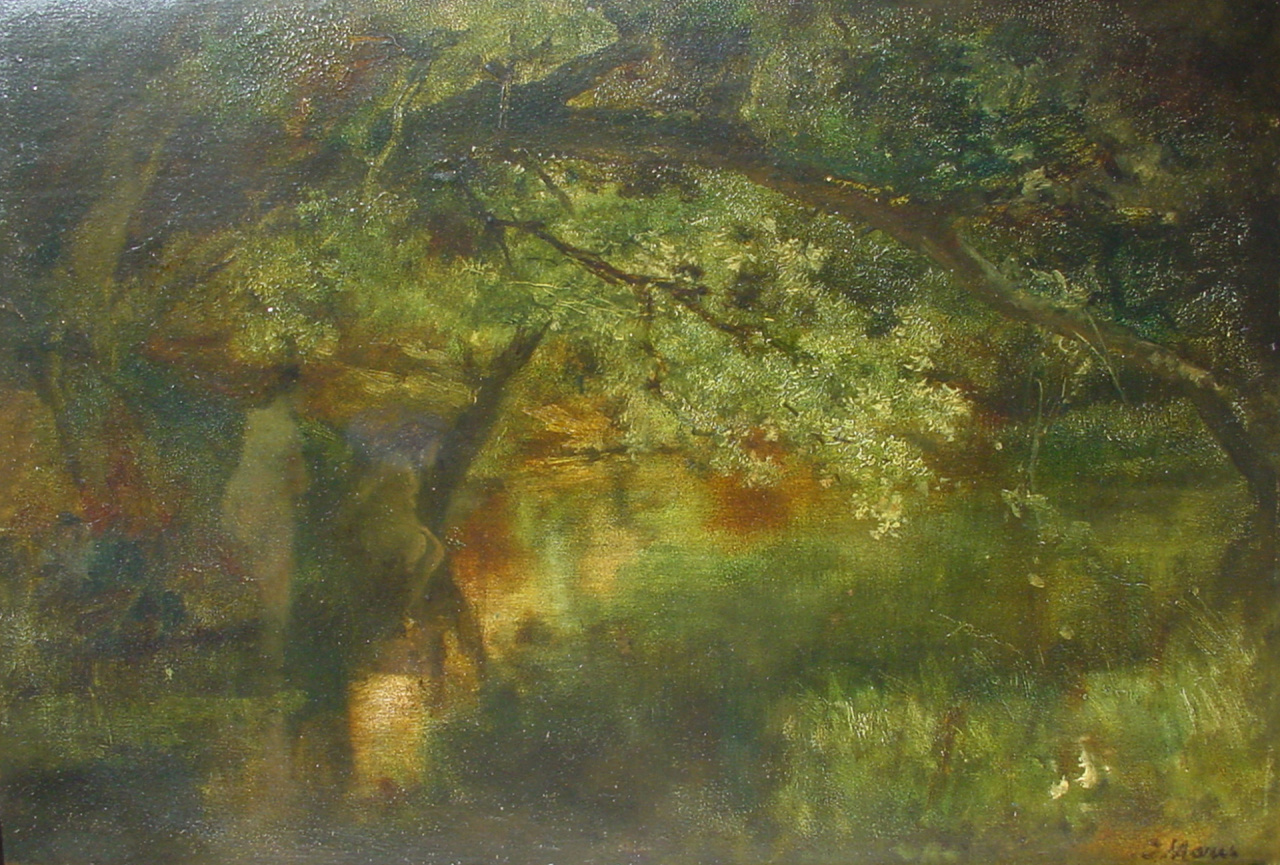
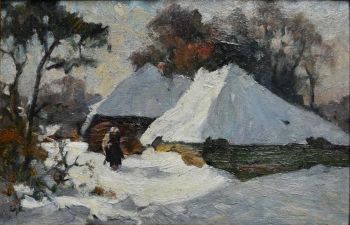
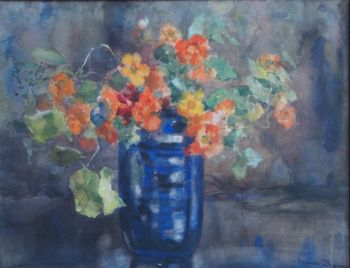
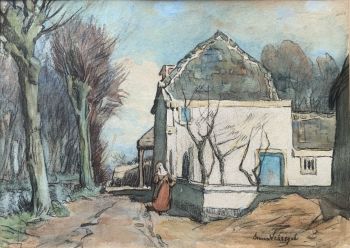
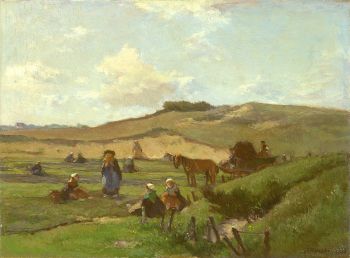
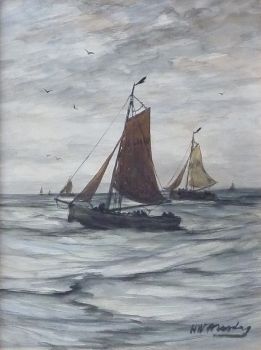
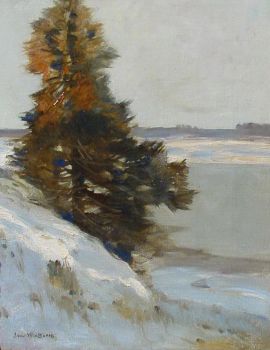
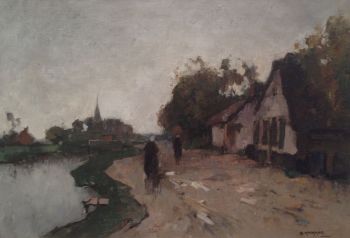
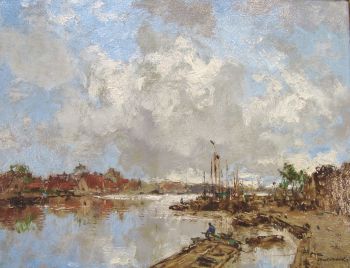
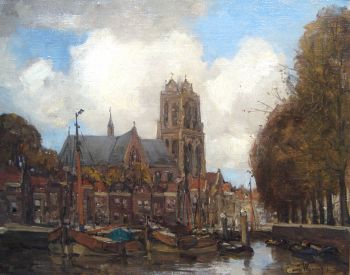
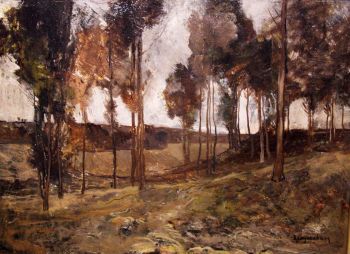
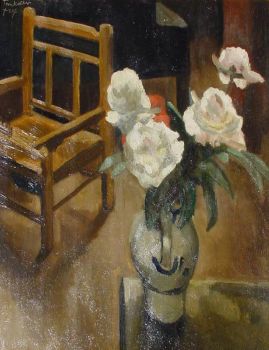
Jacob Maris, born on 25 August 1837 in The Hague, is considered one of the greatest painters of the Hague School and a key figure in the transition from romanticism to realistic impressionism in Dutch art. With his characteristic cloudy skies, canal views and dune landscapes, he was able to capture the melancholy and grandeur of the Dutch landscape like no other.
Maris studied at the Hague Drawing Academy and at the Académie des Beaux-Arts in Antwerp. In his early years he worked in a romantic style, but his stay in Paris around 1865 and later in Oosterbeek and The Hague brought him into contact with plein air painting and a freer, more direct touch. He developed a completely unique visual language in which he was able to translate the gloom of the Dutch climate into dramatic paintings full of character and atmosphere.
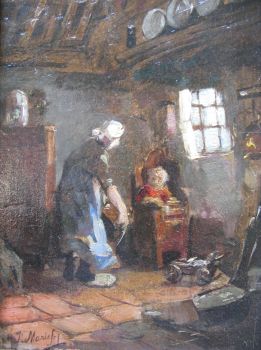
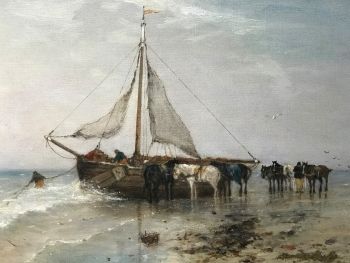
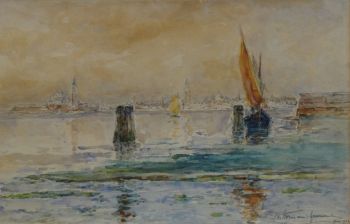
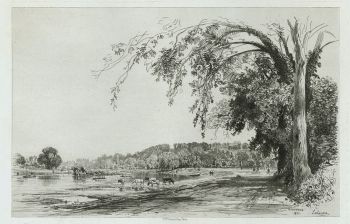
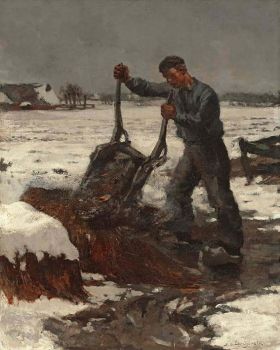
His favourite subjects were the dune landscape at Scheveningen, the canals of Amsterdam, farm life and windmills at sunset. But his true strength lay in the air — the unparalleled grey-blue skies, menacing or silvery broken open, became the hallmark of his hand. His use of colour was subdued and earthy, often composed of greys, ochres and deep blues, but his paintings were never gloomy. They radiated a quiet strength.
Together with his brothers Matthijs and Willem Maris he formed an artistic trinity, but Jacob was without doubt the most monumental of the three. Where Matthijs worked more historically and Willem focused on cattle and meadows, Jacob sought the epic in the everyday landscape — a bridge between the sober realism of the 19th century and the free painting that would usher in the 20th.
Jacob Maris was a member of Pulchri Studio in The Hague, and his work was highly valued during his lifetime, both in the Netherlands and abroad. Artists such as Vincent van Gogh spoke with admiration about his brushwork and use of light.
He died on 7 August 1899 in the spa town of Karlsbad (now Karlovy Vary, Czech Republic), where he had been staying for his health. His death was considered a great loss to the Dutch art world. Today his works hang in the Rijksmuseum, the Gemeentemuseum Den Haag (now Kunstmuseum), and the Van Gogh Museum, among others.
Jacob Maris leaves behind an oeuvre that has captured the silence, space and melancholy of the Netherlands in paint. No painter has brought more weight to a cloud, more feeling to a body of water — and thus managed to capture time and landscape in harmony.