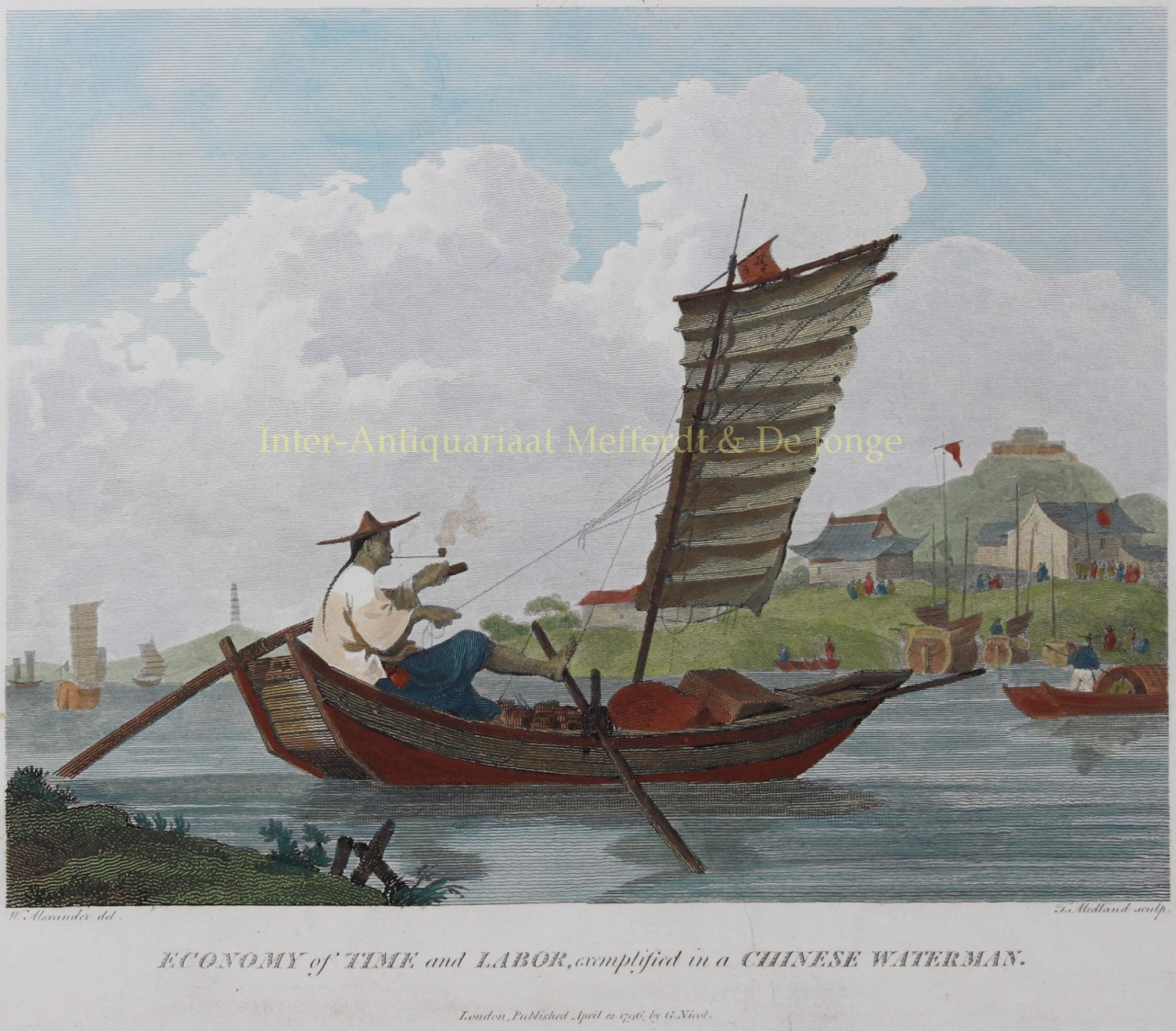
Chinese waterman after William Alexander 1796
William Alexander
€ 195
Inter-Antiquariaat Mefferdt & De Jonge
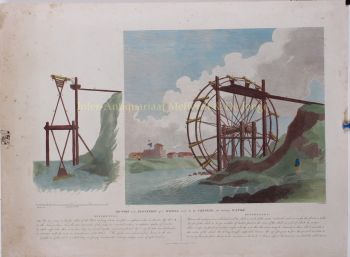
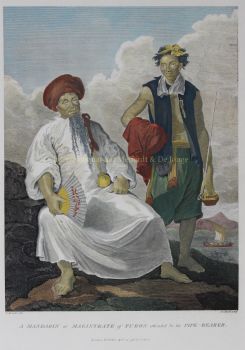
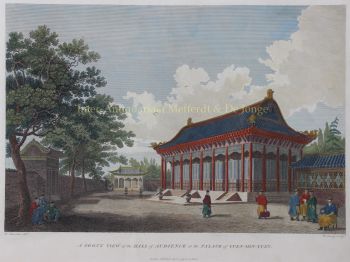
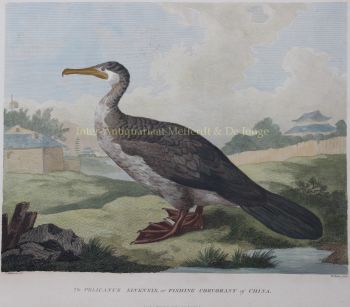
- About the artwork“Economy of Time and Labor, exemplified in a Chinese Waterman” Copper engraving by P. Medland after a drawing by William Alexander (1767-1816 ) from the “Authentic account of an embassy from the King of Great Britain to the Emperor of China; including cursory observations made, and information obtained, in travelling through that ancient empire” written by Sir George Leonard Staunton and published April 12, 1796 in London by G. Nicol. Coloured by a later hand. Size (image): 17,9 x 23 cm. The embassy was headed by Earl George Macartney (1737-1806), who was dispatched to Beijing in 1792. He was accompanied by Staunton a medical doctor as his secretary, and a retinue of suitably impressive size, including Staunton’s 11-year-old son who was nominally the ambassador’s page. On the embassy’s arrival in China it emerged that the 11-year-old was the only European member of the embassy able to speak Mandarin, and thus the only one able to converse with the Emperor. Lord Macartney's embassy was unsuccessful, the Chinese resisting British overtures to establish diplomatic relations in view of opening the vast Chinese realms to free trade, but it opened the way for future British missions, which would eventually lead to the first Opium War and the cession of Hong Kong to Britain in 1842. It also resulted in this invaluable account, prepared at government expense, largely from Lord Macartney's notes, by Staunton, of Chinese manners, customs and artifacts at the height of the Qing dynasty. The engravings are of special interest because of their depiction of subjects that very few Europeans had heard of or seen, showing how advanced Chinese civilisation was on a technical, artistic and organizational level. On his journey to Canton Staunton is impressed with the efficiency of the sailors: "The number of craft of all kinds on the part of the river near the city was immense; but they were all conducted without confusion. The watermen were uncommonly expert, and it was not unusual to see a large boat entirely managed by one man, who rowed, sailed, steered, and smoked his pipe at the same time. He held the sheet or strong rope belonging to the sail with one hand, he steered the boat with the other, and with his foot he pulled an oar, which he feathered at every stroke as neatly as could be done by the hand." Price: Euro 195,-
- About the artist
William Alexander (1767–1816) was the only English artist of the late eighteenth century to penetrate the interior of China, a journey that would define his career and secure his reputation. Born in Maidstone, Kent, the son of a coachbuilder, he showed early artistic talent and studied in London, possibly under Julius Caesar Ibbetson, before entering the Royal Academy Schools.
In 1792 Alexander joined the British embassy of Lord Macartney to China as junior draughtsman. Although the diplomatic mission failed to establish lasting trade relations with the Qianlong Emperor, it provided Alexander with extraordinary first-hand material. At a time when Chinoiserie captivated Europe, his detailed watercolours of Chinese landscapes, architecture and daily life attracted wide acclaim. Many were engraved for the official account of the embassy and for publications such as View of the Headlands, Islands, etc. (1798) and John Barrow’s A Voyage to Cochin China (1806).
Back in England, Alexander refined his Chinese sketches into exhibition pieces for the Royal Academy and worked within the vibrant watercolour circle around Dr Monro, alongside artists such as Thomas Girtin. In 1802 he became Professor of Landscape Drawing at the Royal Military Academy in Great Marlow.
In 1808 he resigned this post to become one of the first curators at the British Museum, serving as Keeper of Prints and Drawings and assistant librarian. There he began compiling the museum’s first inventory of prints and drawings and illustrated important antiquities from the Townley collection. A member of the Society of Antiquaries, Alexander later turned increasingly to picturesque landscapes and studies of classical objects.
He died in 1816 in Maidstone, aged forty-nine. Today, his work is held in major public collections including the British Library, Tate and the Victoria and Albert Museum, and remains an invaluable visual record of late eighteenth-century China as seen through British eyes.

Are you interested in buying this artwork?
Artwork details
Related artworks
- 1 - 4 / 12
- 1 - 4 / 24
- 1 - 4 / 12


![European hunting party] by Unknown artist](https://media-2.gallerease.com/images/cb8cbebf-7709-4817-9bdb-fef8ae1e93cf/350x350/european-hunting-party.jpg)