Charley Toorop was not an artist you can easily overlook. Her paintings do not scream for attention, but hold you, right in the eyes. She was a woman who carved her own path in a world full of male painters, with a brush as her weapon and an unyielding spirit as her compass.
Born as Annie Caroline Pontifex Toorop on 24 March 1891 in Katwijk aan Zee, Charley was the daughter of the famous symbolist artist Jan Toorop. She was immersed in the world of art at a young age, but she emphatically chose her own course. Where her father moved in mysticism and ornament, Charley sought the truth of the visible – raw, direct, and without embellishment.
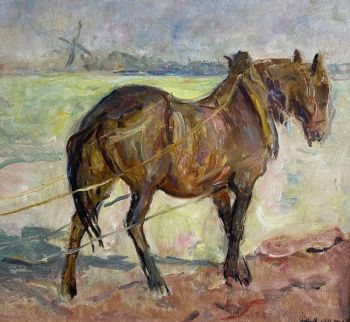
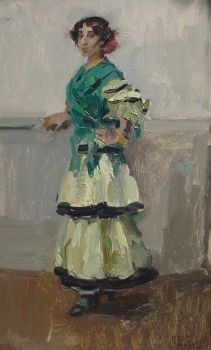
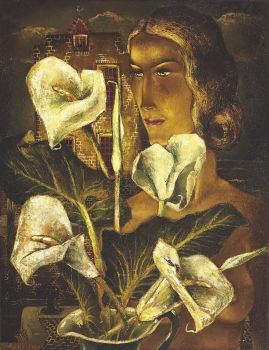
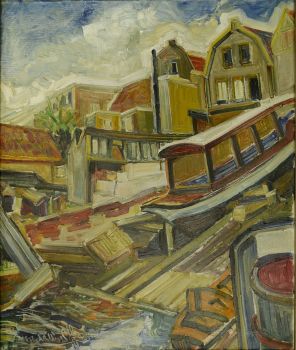
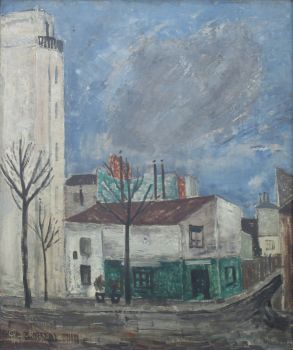
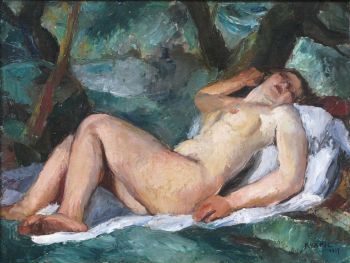
In the 1920s and 1930s she developed her characteristic style: realistic, brightly coloured, with hard contours and an intense, sometimes merciless look at her subjects. She mainly painted portraits, workers, farmers, and herself – always with a deep psychological awareness. Her work is powerful, almost physical, and reflects her belief that art should be at the heart of life.
Charley Toorop was more than just a painter – she was a linchpin in Dutch art life. Her home in Bergen (N-H) became a meeting place for innovative artists such as Piet Mondriaan, Gerrit Rietveld and the young generation of the Bergen School. She stimulated and connected, but never lost her autonomy.
As a single mother, she raised three children, including Edgar Fernhout, who became an artist himself. Her relationship with motherhood, artistry and being a woman is still the subject of research and admiration. At a time when women in the art world were mainly seen as muses, Charley was resolutely a creator – and the master of her own image.
In her later years she continued to work tirelessly, often despite physical discomfort. Her paintings from this period, such as her penetrating self-portraits, testify to a rare self-insight and strength. She died in 1955 in Bergen, but her legacy lives on – not only in museums, such as the Kröller-Müller Museum or Museum MORE, but also in the way female artists claim their place today.
Charley Toorop painted life as she saw it: confrontational, honest and full of existential depth. She was not a stylist, but a seeker of truth – and her work continues to look back.