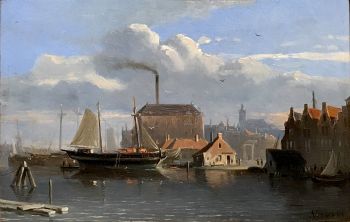
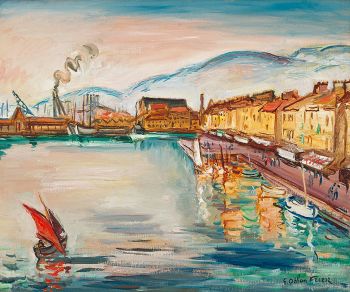
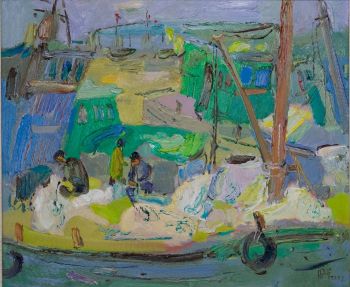
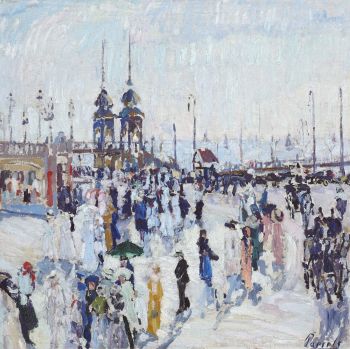
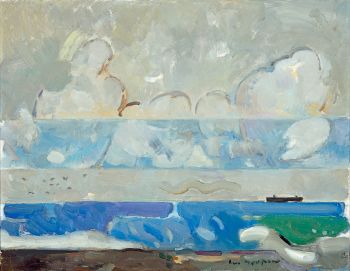
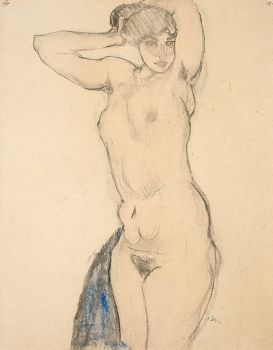
Siebe Johannes ten Cate (1858–1908) was a Dutch painter and draftsman best known for his vivid cityscapes, seascapes, and scenes from everyday life, often seen through the eyes of a curious, almost poetic outsider. Although born in Sneek, Friesland, Ten Cate found his artistic home in France, where he was part of the vibrant art world of the fin de siècle.
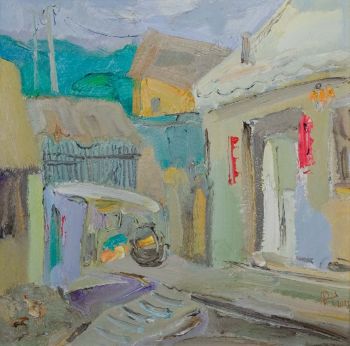
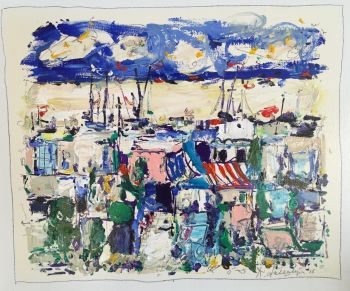
After training at the Rijksakademie van Beeldende Kunsten in Amsterdam, Ten Cate, like many of his contemporaries, left for Paris, the beating heart of European art. There he developed in the atmosphere of Impressionism and Post-Impressionism, but he always retained an idiosyncratic voice. His style was characterized by a loose brushwork, a lively palette, and a warm interest in everyday life: bustling markets, elegant boulevards, tranquil shipyards.
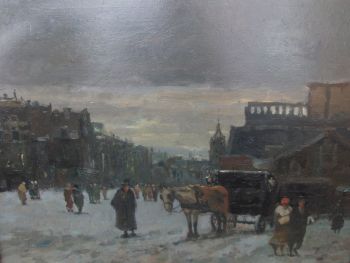
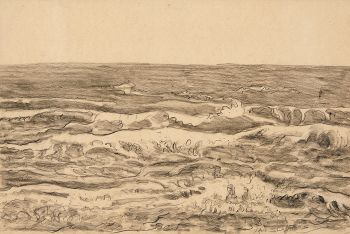
Siebe ten Cate traveled extensively. His work exudes the atmosphere of harbour towns, river landscapes and coastal villages in France, the Netherlands and England. In his paintings we capture moments of transition: the light breaking over a wet street, a ship just docking, people in fleeting encounter. He did not paint the grand historical gestures, but the small, tangible movements of life.
Ten Cate was particularly respected in France and exhibited there regularly, including at the prestigious Salon des Indépendants. In the Netherlands, his fame initially lagged behind, partly because he cared little about national borders and art politics. His art was universal in atmosphere and subject, averse to national movements such as the Hague School.
His life also had a tragic side: as his career progressed, Ten Cate was faced with financial worries and health problems. He died unexpectedly in Paris in 1908, at the age of only fifty.
Only later was his work rediscovered in the Netherlands and appreciated as an important link between traditional Dutch painting and the international modernity of the late 19th century. Today, Siebe ten Cate is praised as a painter of the fleeting moment, a Frisian cosmopolitan who captured the world with an open and narrative view.