About the artist
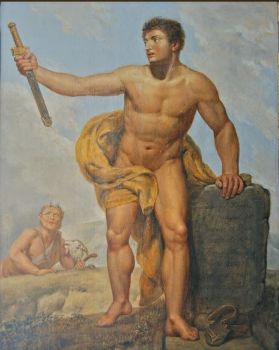
Léon Cogniet (1794–1880) was a French painter and respected teacher, known for his historical scenes, portraits, and influential role in French academic art in the 19th century.
Born in Paris to a family of artisans, Cogniet was admitted to the École des Beaux-Arts at a young age. There he studied under Pierre-Narcisse Guérin and developed a style that was strongly rooted in Neoclassicism but later began to show influences of Romantic drama. In 1817 he won the prestigious Prix de Rome with a painting of Hannibal at the Alps, which earned him a residency at the Villa Medici in Rome.
Back in France, Cogniet became a celebrated painter of large historical scenes. One of his best-known works is The Execution of Emperor Maximilian (1827), which demonstrates the dramatic power of his style. His work was regularly exhibited at the Salon and appreciated for its compositional power, controlled use of color, and academic precision.
In addition to his painting practice, Cogniet made a name for himself as a teacher. From 1831, he taught at the École des Beaux-Arts in Paris, where he trained many influential artists, including Léon Bonnat and Jean-Paul Laurens. He also led his own studio for female artists between 1847 and 1860, which was exceptional in his time.
In his later years, Cogniet largely put down his brush to devote himself entirely to teaching. His style fell somewhat out of fashion with the rise of realism and impressionism, but his contribution to the academic tradition and his pedagogical work remained of great significance.
Léon Cogniet died in Paris in 1880. His works are now in collections including the Louvre, the Musée d'Orsay and the Musée des Beaux-Arts de Nantes.
Artworks
Filter Artworks
1 artwork for sale by Léon Cogniet

Related artworks for sale

Gijsbertus Jan Sijthoff
Interior scene with a woman doing needlework1890 - 1920
Price on requestVan der Aalst Fine Art
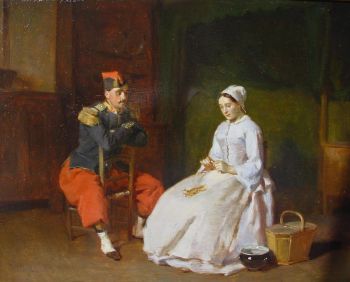

Willem George Frederik Jansen
Rivierlandschap1871 - 1949
Price on requestPrivate Collection Classic Arts
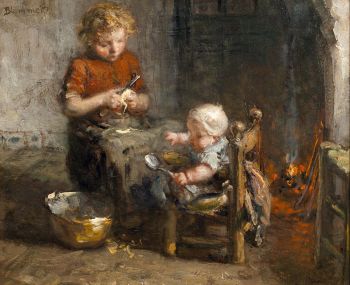

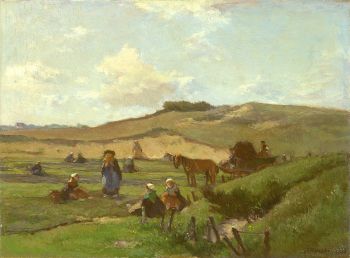
Johannes Evert Akkeringa
'Nettenboetsters' in the Dunes1861 - 1942
Price on requestStudio 2000 Art Gallery