Herman Friedrich (Herman) Bieling (Rotterdam, 21 June 1887 – Rhoon, 5 December 1964) was an influential Dutch painter, graphic artist and sculptor of German descent. He played a crucial role in the development of modern art in the Netherlands and was a fervent supporter of avant-garde movements.
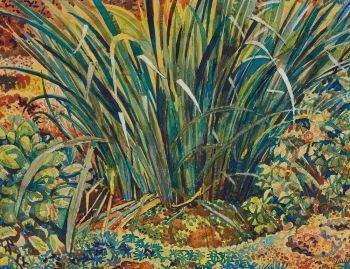
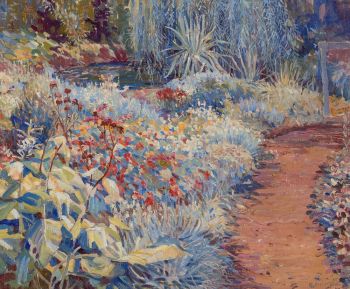
Bieling was born in Rotterdam and attended evening classes at the Academy of Fine Arts in the same city. During his education he lived with his parents in Hillegersberg, a district of Rotterdam. His early works show influences of luminism and expressionism, movements that were emerging at the time.
In 1917 Bieling was one of the founders of the Rotterdam artists' federation 'De Branding', one of the most important avant-garde groups during the First World War. This federation was founded as a protest against the rigid and conservative art climate in Rotterdam, which offered young, modern artists little space to exhibit their work. During the relatively short period of existence of De Branding (1917-1926), many avant-garde artists were given the opportunity to exhibit in Rotterdam. Not only Dutch, but also foreign artists such as Kurt Schwitters, Paul Klee, Constantin Brancusi, Henri Le Fauconnier and Gustave de Smet were represented at the exhibitions.
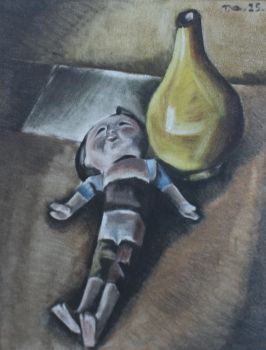
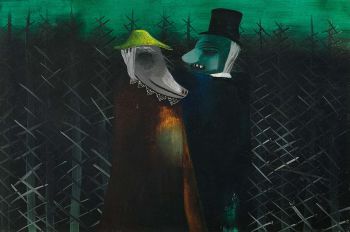
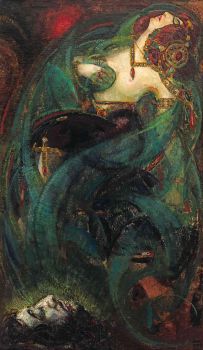
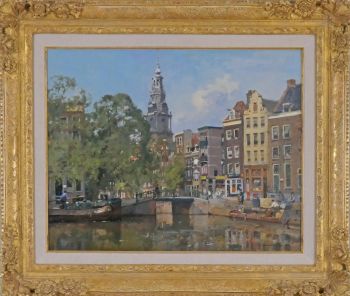
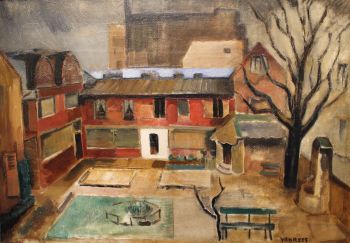
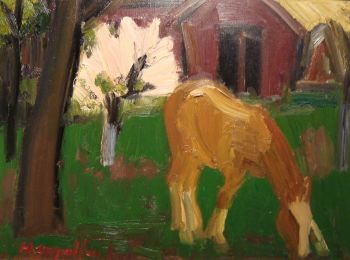
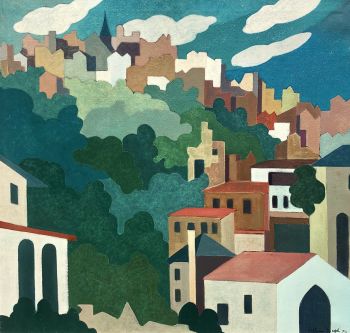
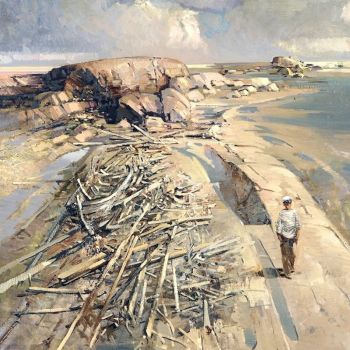
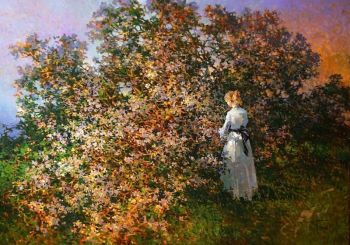
Bieling experimented with various styles, including luminism, expressionism and cubism. His work from the period 1915-1918 shows luminist and expressionist influences, while between 1917 and 1920 he leaned more towards cubism, especially in his stylised landscapes. From the 1930s onwards he returned to a more realistic approach, which he shaped in his own, recognisable style. Despite his appreciation for abstract art, Bieling remained faithful to figuration; for him, reality always had to remain recognisable in his work.
After his marriage in 1920, Bieling lived alternately in Bennekom, Renkum and Noordwijk. Between 1928 and 1938 he returned to Hillegersberg, where he mainly produced realistic work. In 1938 he settled in Rhoon, where he lived until his death in 1964. Bieling was an avid traveller; he visited France (Brittany, Corsica), Germany, Finland and the United States, where his son lived. In 1928 he visited Mallorca for the first time and spent some time in Morocco.
Herman Bieling died on 5 December 1964 in Rhoon. His work is included in the collections of various museums, including the Museum Boijmans Van Beuningen in Rotterdam, the Gemeentemuseum Den Haag, the Stedelijk Museum Schiedam and the Centraal Museum Utrecht. Despite a studio fire in 1930, in which many of his avant-garde works were lost, his remaining oeuvre remains a testament to his versatility and dedication to modern art.