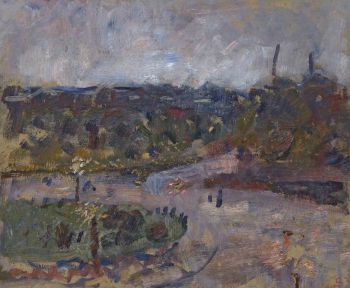
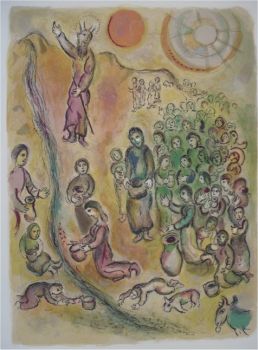
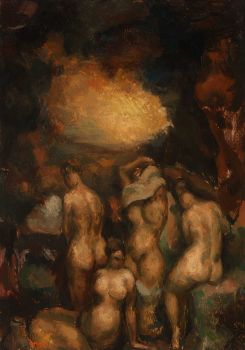
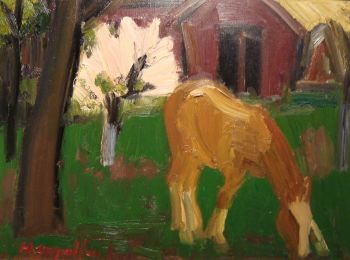
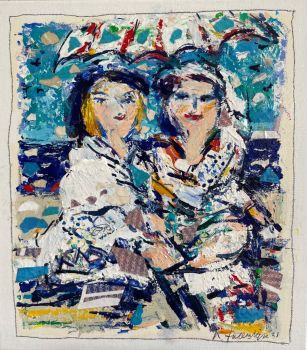
Gerrit Willem van Blaaderen (1873–1935) was a prominent Dutch painter and draftsman who played an important role in the development of modern Dutch painting. He is associated with both the Laren School and the early Bergen School and was considered one of the most innovative artists in the Netherlands in his own time.
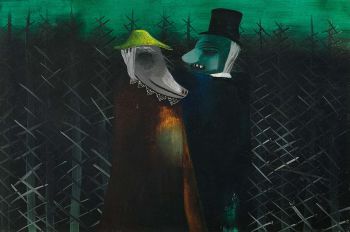
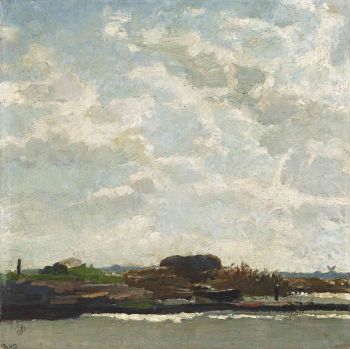
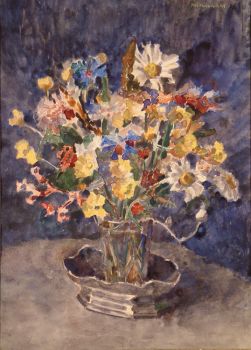
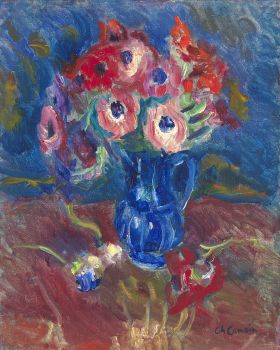
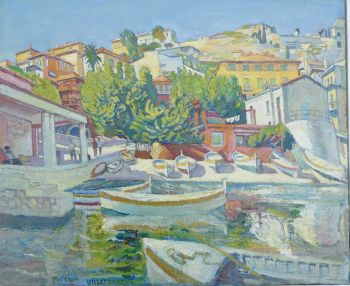
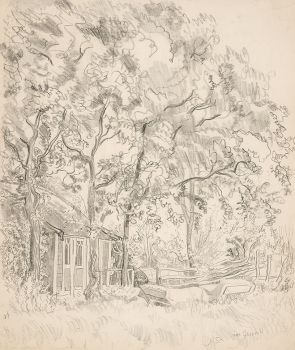
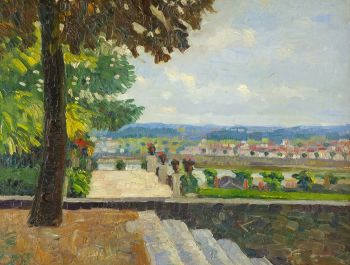
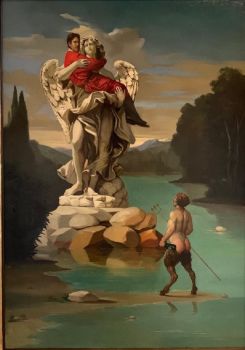
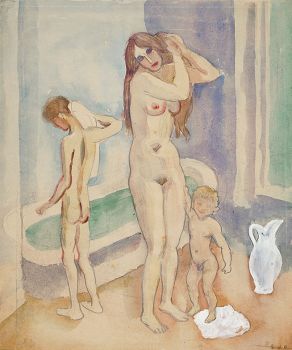
Van Blaaderen began his career in the tradition of Dutch Impressionism but gradually developed a more powerful and expressive visual language. His work is characterized by a strong emphasis on form, composition, and color, drawing inspiration from international modern movements without losing his own recognizable style. Landscapes, village scenes, still lifes, and figure representations formed recurring themes within his oeuvre.
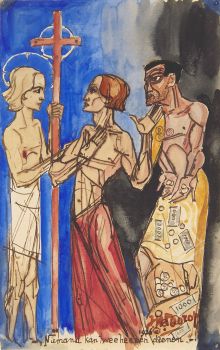
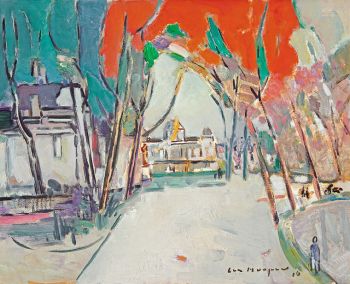
After a period in Laren, Van Blaaderen settled in Bergen, where he became one of the artists who laid the foundation for the Bergen School. This group of artists was known for its expressionist approach, dark color tones, and monumental simplification of forms. Van Blaaderen contributed significantly to this development and helped open Dutch art to modern European influences.
His paintings combine a powerful structure with a subtle sensitivity to atmosphere and light. Although his work was sometimes overshadowed by that of his contemporaries, he is now recognized as an important link between the Impressionism of the nineteenth century and the Expressionism of the twentieth century. Consequently, his oeuvre occupies a special place within the history of Dutch modern art.