Emmanuel de La Villéon was born on 29 May 1858 in Fougères, Brittany, into an old noble Breton family. His father, Count Arthur de La Villéon, and his mother, Sidonie de la Hubaudière, gave him an education in which literature, poetry and drawing played an important role. Despite the traditional expectations within his family, Emmanuel chose an artistic career.
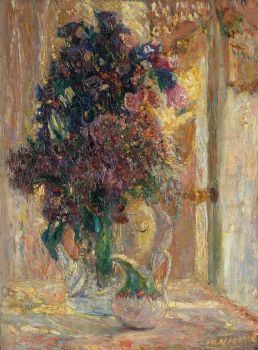
In 1880, he moved to Paris and enrolled at the Académie Julian, where he was taught by Alfred Roll and Pierre Emmanuel Eugène Damoye, among others. Initially he painted in the style of the Barbizon School, but later he developed a preference for Impressionism, influenced by artists such as Claude Monet, Paul Cézanne and Vincent van Gogh.
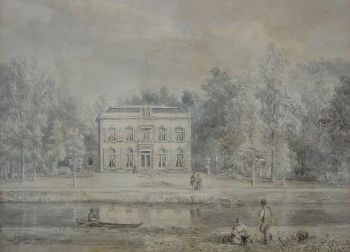
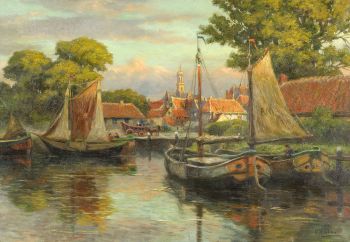
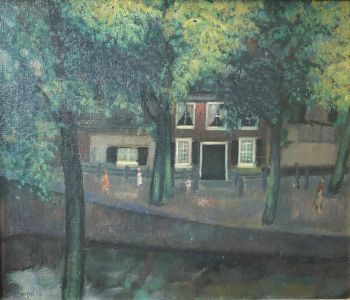
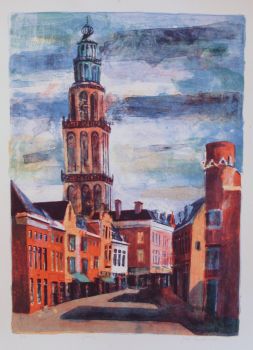
De La Villéon was an avid traveller and found inspiration in various landscapes. He regularly stayed in Brittany, Normandy, Switzerland and the Cher department, where he made numerous sketches and paintings. His first foreign trip took him to the Netherlands in 1889, where he became fascinated by the special light.
In 1892 he married Thérèse de Baudreuil, who came from a musical family. He shared a love of classical music, and Mozart in particular, with his wife. He often listened to Mozart's music while painting and once said: "Mozart is my painting."
His work was regularly exhibited in prestigious salons such as the Salon des Indépendants, the Salon National des Beaux-Arts and the Salon d'Automne. In 1918, nine of his large paintings were exhibited in the United States, and his work was also shown in Canada, Copenhagen and Japan. The French government purchased three of his paintings, which is evidence of the recognition he enjoyed.
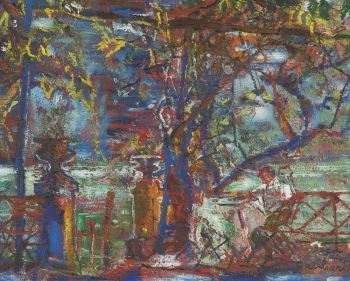
From 1900 to 1936, De La Villéon lived in Salvar, in the Puisaye region. About 30% of his oeuvre consists of paintings of the landscape of this region. His love of nature and rural life is evident in his work, in which he captured the harmony and serenity of rural France.
Emmanuel de La Villéon died of pneumonia in Paris on 10 January 1944 and was buried in the Montparnasse cemetery. In honour of his legacy, the Musée Emmanuel-de-la-Villéon was founded in his birthplace of Fougères, where an extensive collection of his works is exhibited.