Gedateerd 1972
Tentoonstelling Melissen, Antoon and David Leiber, Jan Schoonhoven, exh.cat. New York (David Zwirner), pp. 106-107 Rigo, Camillo and Bas Meijer, Jan Schoonhoven. Editions, Schiedam (Scriptum Art Books) 2018, pp. 72-80
Grootte 60 x 50 cm
Signatuur Linksonder gesigneerd en gedateerd en genummerd 18/35
Stroming Zero-beweging
Provenance Particuliere collectie Leeuwarden
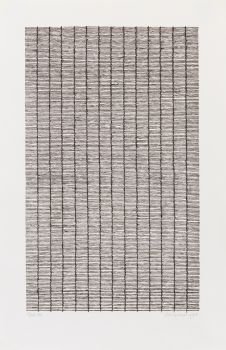
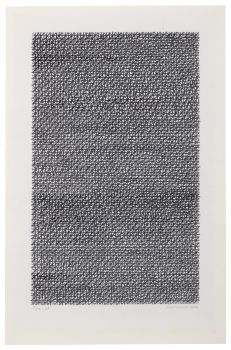
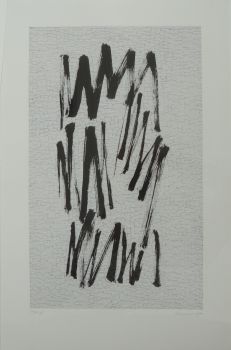
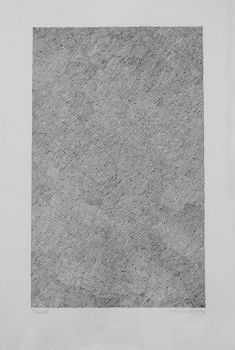
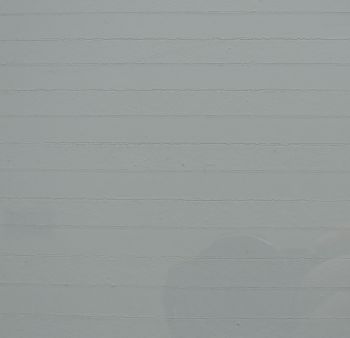
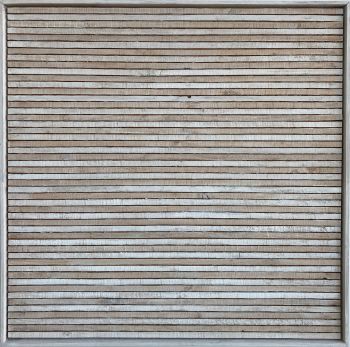
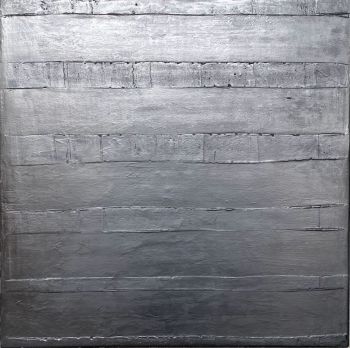
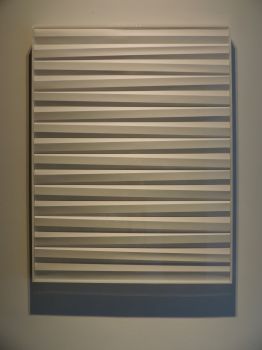
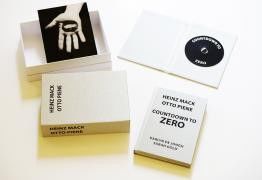
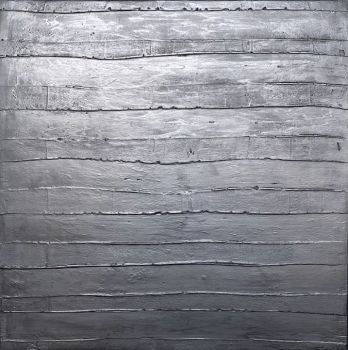
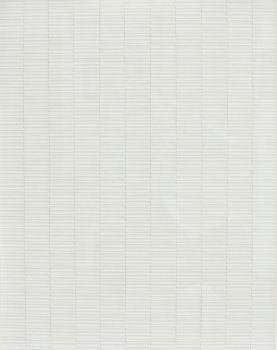
Geprägte Strukturen (M I–VIII) (1972) van Jan Schoonhoven is een serie van acht reliëfdrukken waarin de kunstenaar zijn kenmerkende, minimalistische vormentaal verkent. Elk werk (59 × 49,7 cm) toont subtiele, geometrische structuren die spelen met licht en schaduw, waardoor een verstilde, bijna architectonische ritmiek ontstaat. Schoonhoven benadrukt met deze werken de schoonheid van herhaling, eenvoud en materiaal, waarbij de reliëfstructuren een tastbare dimensie toevoegen aan het ogenschijnlijk sobere oppervlak. Jan Schoonhoven geldt als dé Delftse meester van de twintigste eeuw. Met zijn unieke beeldtaal heeft hij generaties kunstenaars beïnvloed. Als lid van de Nul-groep (gelieerd aan de internationale ZERO-beweging) behoort hij in de jaren zestig tot de Europese avant-garde en wordt hij al bij leven internationaal geroemd en geprezen. Vanaf het eind van de jaren vijftig ontwikkelt hij met zijn monochroom-witte reliëfs van papier en karton een volstrekt eigen beeldtaal. Schoonhoven ‘speelt’ met licht, net als die andere beroemde Delftse kunstenaar, de schilder, Johannes Vermeer (1632-1675). De serie uit 1972 die wij presenteren maakt deel uit van een oplage van 120 + 35 AP-exemplaren (deze 35 exemplaren zijn artist’s proofs of epreuve d'artiste), en elk blad is gesigneerd en gedateerd rechtsonder en genummerd linksonder. Onze serie is nummer 18/35. Alle signaturen op de doos, het voorblad en elke structuur zijn met de hand aangebracht door Jan Schoonhoven. Onze serie zit in de originele kartonnen verpakking. Ieder van de bladen is in uitstekende conditie.
Jan Schoonhoven, born on June 26, 1914 in Delft, the Netherlands, is considered one of the most influential abstract artists of the twentieth century. He was a master of creating subtle, minimalist works of art that were often characterized by a play of light and shadow. Schoonhoven was a pioneer of geometric abstraction and a key figure in the Dutch avant-garde.
Education and early career Schoonhoven studied at the Royal Academy of Art in The Hague, where he laid his artistic foundation. In addition to his work as an artist, he worked as a civil servant at the PTT (the Dutch postal service) throughout his career. This stable job allowed him to develop his art without commercial pressure, which gave his work a pure and uncompromising character.
Oeuvre and style Jan Schoonhoven's work is best known for his reliefs, often made of cardboard, papier-mâché and white paint. His sculptural works have a rhythmic, almost architectural quality and evoke associations with light falling on buildings or shadows in urban spaces. Through his consistent use of white and his emphasis on structure and texture, he invited the viewer to explore the subtleties of his work.
His art is often associated with the Zero movement (Nul in the Netherlands), an international avant-garde movement that challenged the traditional idea of art by emphasizing objectivity, simplicity and the use of industrial materials. Schoonhoven shared the Zero artists' vision of stripping art of emotional and personal expression, and instead focusing on pure form and material.
International recognition In the 1960s, Jan Schoonhoven gained international recognition. He exhibited at prestigious venues such as the documenta in Kassel and the Venice Biennale, where he won second prize in 1967. His work attracted the attention of collectors and museums worldwide, making him one of the most celebrated Dutch artists of his time.
Personality and working method Despite his growing fame, Schoonhoven remained a modest and reserved person. His methodical working method and strict discipline reflected his calm and disciplined personality. His studio was a small workspace, where he carefully worked on his artworks, often in the evenings after his work at the PTT.
Legacy Jan Schoonhoven died on 31 July 1994 in his birthplace Delft. His influence on modern art is undeniable. His reliefs remain a source of inspiration for artists and admirers of minimalist art. His work is included in the collections of prominent museums, including the Stedelijk Museum in Amsterdam and the Museum of Modern Art in New York.
Schoonhoven is remembered as an artist who knew how to transform the everyday into something extraordinary. His pursuit of simplicity and harmony in a complex world makes his work timeless and relevant, even decades after his death.
and also in his line drawings. He maintains his own unique signature.