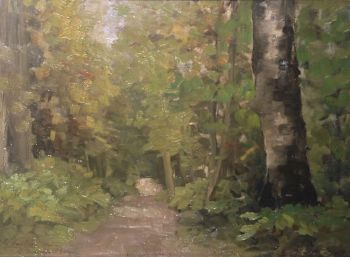
Bernardus Antonie ('Bernard') van Beek (Amsterdam, 30 January 1875 – Kortenhoef, 6 March 1941) was a Dutch painter, known for his atmospheric landscapes and associated with the Hague School. His work is characterised by a subtle use of colour and a special attention to the mood of the landscape.
Youth and education
Van Beek began his career as a decorative painter with his father and then studied at the School for Applied Arts. Although he did not receive formal academic training in painting, he developed into a skilled painter.
Artistic development and influences
Initially, Van Beek lived and worked in Amsterdam, but from 1901 onwards he regularly visited the water-rich Kortenhoef to paint. In 1911 he settled permanently in this village, where he became friends with Constant Gabriël. Gabriël had a great influence on Van Beek's early work and introduced him to subjects such as ditches with water lilies, drying traps at a lake and peat dredgers. He also received advice from Evert Pieters and Jan Hillebrand Wijsmuller, who further refined his technique.
Style and theme
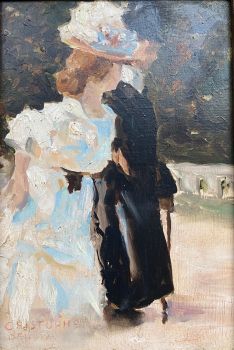
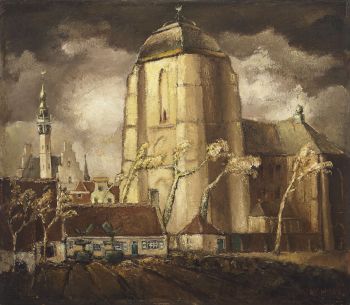
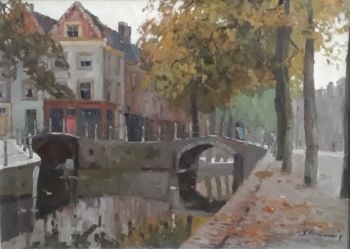
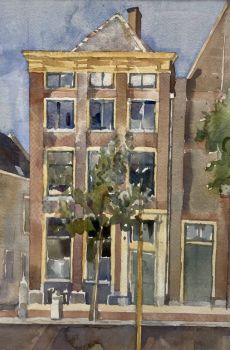
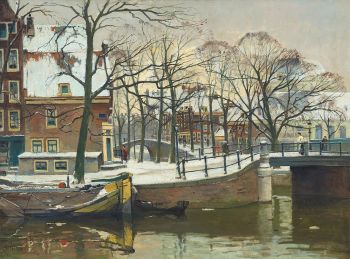
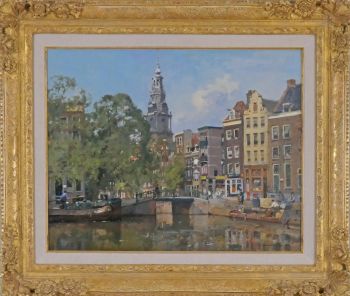
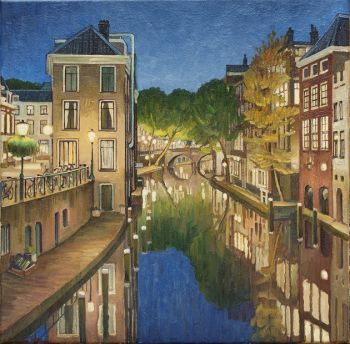
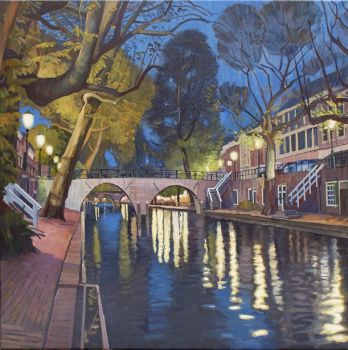
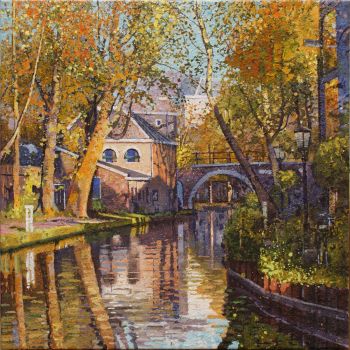
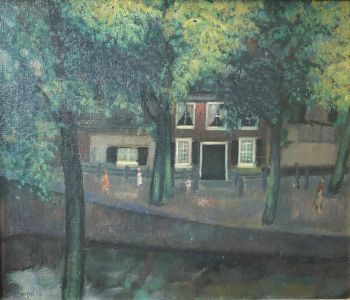
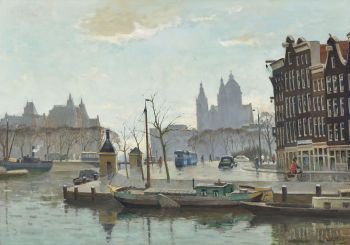
Van Beek's landscapes show a clear influence of the Hague School, with an emphasis on tonality and atmosphere. His palette is predominantly subdued, with subtle colour nuances that capture the melancholy and tranquillity of the Dutch landscape. In addition to the characteristic Kortenhoef lakes and water lilies, he also painted old city neighbourhoods and, especially in the 1920s, bright, light village scenes.
Heritage and legacy
Bernard van Beek died on 6 March 1941 in Kortenhoef, aged 66. His work is included in the collections of various museums, including the Goois Museum in Hilversum. His paintings offer a timeless window into the Dutch landscape and village life of the early 20th century, and remain prized for their serene beauty and technical craftsmanship.