Carl Fahringer (1874-1952) – A Versatile Austrian Painter and Illustrator
Early Life and Education
Carl Fahringer was born on December 25, 1874 in Wiener Neustadt, Austria. In 1892, he began his artistic education at the Vienna Academy of Fine Arts, where he studied under influential artists such as Sigmund l'Allemand, Christian Griepenkerl, and August Eisenmenger. After several years in Vienna, he moved to Munich in 1898 to continue his studies with Carl Marr, an important figure in the Munich art scene.
Career and Travels
Fahringer's artistic career was marked by a strong desire to explore and document the world. After his marriage to Rosina Strobl in 1904, he embarked on a series of international travels, visiting Italy, the Balkans, Turkey, and Egypt. During these trips, he painted a wide range of subjects, including street scenes, portraits, and animals.
War years and artistic development
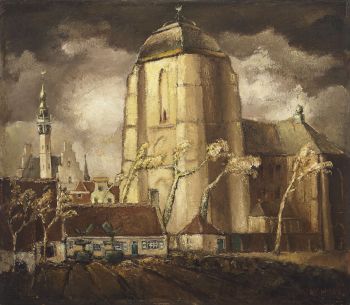
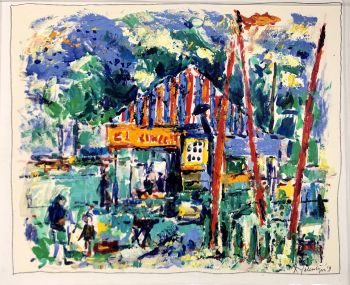
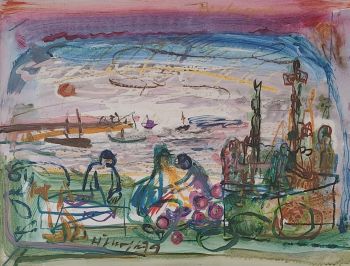
When the First World War broke out, Fahringer volunteered for the Austro-Hungarian army. From 1915 onwards, he was deployed as a war painter, a role in which he captured soldiers' lives and war scenes on the front in Italy and Galicia. After the war, he resumed his travels and stayed regularly in the Netherlands. From the Netherlands, he visited the Dutch East Indies several times, where he painted in Java and Bali. In the Netherlands, he worked in Hoorn and Delft, among other places, where he was inspired by market scenes and street life.
Illustrations and academic career
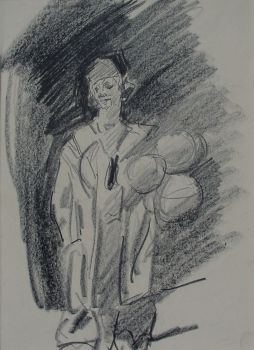
In addition to his work as a painter, Fahringer was also active as an illustrator. He illustrated stories by Hedwig von Lepl-Gnitz, including the book Märchenzauber. His detailed and expressive illustrations contributed to his reputation as a versatile artist.
In 1929, Fahringer was appointed professor at the Vienna Academy of Fine Arts. Until 1945 he taught animal and landscape painting. He spent much time in the Tiergarten Schönbrunn, Vienna's zoo, where he observed and painted animals in their natural habitat. During World War II he was deployed again, this time as a war correspondent in Greece. After the war he was dismissed from his position at the academy.
Legacy
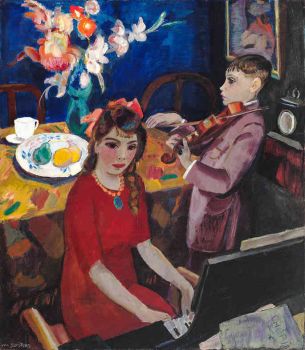
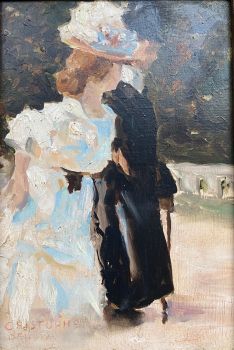
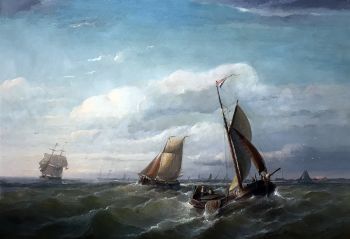
Carl Fahringer died on 4 February 1952 in Vienna at the age of 78. His work, which contains both impressionist and realistic influences, is still appreciated and can be found in various collections in Austria, the Netherlands and Indonesia. His paintings of exotic locations, animal studies and lively street scenes remain an important part of Austrian art history.