Antoine Wiertz was born in 1929 into a creative family and named after the eccentric Belgian painter Antoine Wiertz by his father, the painter Joub Wiertz. Despite this artistic name, a career in art did not seem to be for him at first. As one of seven children, he grew up in poverty during the war years, which made a pragmatic career choice obvious.
After his education at the Kunstnijverheidsschool, Wiertz started his career as a window dresser at the Bijenkorf in Amsterdam. He later developed into a graphic designer and worked at various advertising agencies. During the day he was involved in commercial designs, but in the evenings he worked on his own projects. Eventually he set up his own agency: Studio Wiertz, located on the Singel in Amsterdam. His studio was located upstairs in this building, where he started painting in addition to his advertising work.
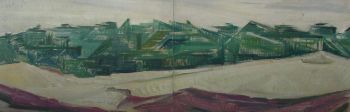
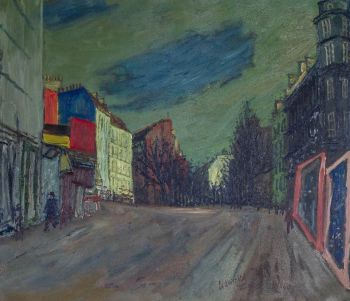
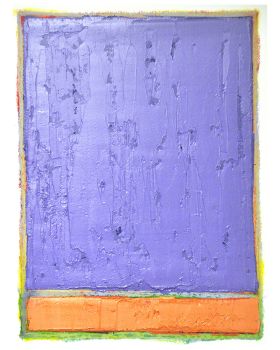
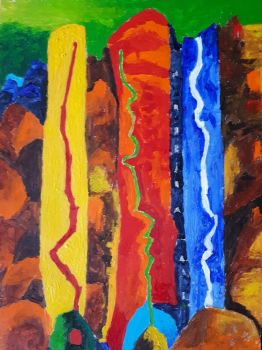
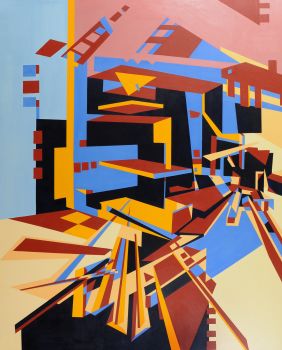
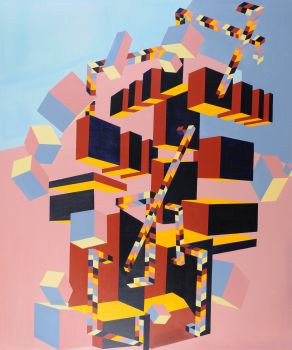
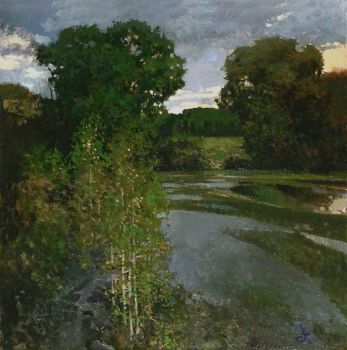
The inspiring environment of Studio Wiertz, where artists such as Jim Rayment and Sam Middleton also worked, stimulated his artistic development. His early paintings focused on dilapidated houses and cityscapes, a theme he also incorporated into his graphics. Later, he moved away from urban elements and painted pure landscapes without buildings. His style evolved into highly abstracted works, characterized by geometric shapes that evoke associations with the early period of cubism.
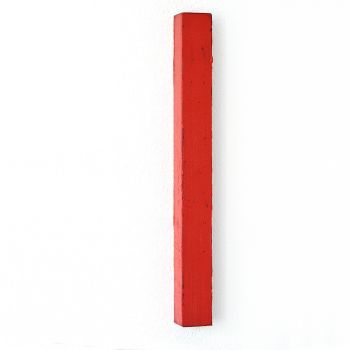
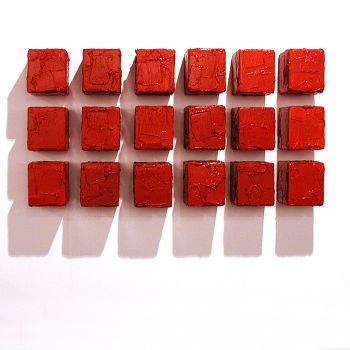
After his retirement, Wiertz moved his studio to the Wilhelmina Gasthuisterrein in Amsterdam Oud-West. Here he once again found a community of artists with whom he had a lot of contact. During this period, he began making spatial collages that were reminiscent of architecture. These works were predominantly white, with subtle accents of color.
Wiertz exhibited at various galleries, including Galerie Clement, Galerie Nine and Het Glazen Huis in the Amstelpark. He was also a regular participant in the open studios on the Wilhelmina Gasthuisterrein. His work, which bridges the gap between graphic design and painting, lives on and is honored by his children. At their initiative, WG Kunst presents an overview of his oeuvre during the first Weekend Salon of the new year.
With a career that embraced both the applied and the free arts, Antoine Wiertz left behind a multifaceted and layered artistic legacy.