Charles Verlat, also known as Karel Verlat, was one of the most accomplished and versatile Belgian artists of the nineteenth century. Painter, printmaker, draftsman, and influential teacher, Verlat played a major role in shaping the Belgian academic art world and later became director of the prestigious Royal Academy of Fine Arts Antwerp. His artistic career combined technical mastery with an exceptional range of subjects, from monumental historical scenes to intimate animal studies and satirical compositions.
Born in Antwerp in 1824, Verlat initially trained within the academic tradition but quickly developed a highly personal and realistic style. He travelled extensively through Europe and the Middle East, experiences that enriched both his palette and subject matter. His work was deeply influenced by the realism and dramatic intensity of the great Flemish masters, particularly Rubens and the Baroque tradition, while also embracing the precision and observation characteristic of nineteenth-century realism.
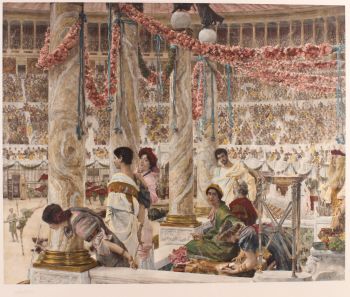
Verlat became especially renowned for his remarkably lifelike animal paintings, establishing himself as one of Europe’s leading animalier painters. His depictions of lions, horses, dogs, and exotic animals were admired for their anatomical precision, movement, and emotional power. Alongside these works, he produced ambitious Biblical and historical paintings filled with theatrical drama, rich textures, and strong narrative composition.
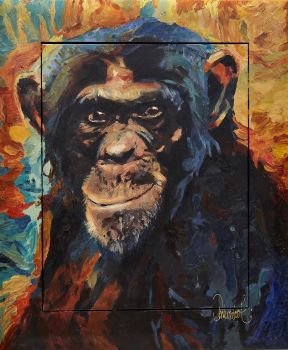
A distinctive and more playful aspect of his oeuvre was his series of satirical monkey paintings, or singeries, in which monkeys were portrayed engaging in human behavior and social rituals. These humorous yet sharp observations of society reflected Verlat’s wit and his ability to combine technical sophistication with irony and social commentary.
As director and professor at the Antwerp Academy, Verlat also had a lasting influence on younger generations of Belgian artists. His teaching emphasized strong draftsmanship, observation from life, and technical excellence, reinforcing Antwerp’s position as one of Europe’s major artistic centers.
Today, Charles Verlat is remembered as a pivotal figure in nineteenth-century Belgian art: a master technician whose work ranged from monumental realism to humor and satire, and whose legacy continues through both his paintings and his impact as an educator.