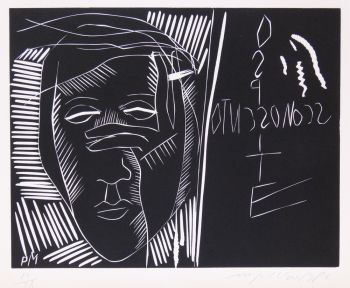
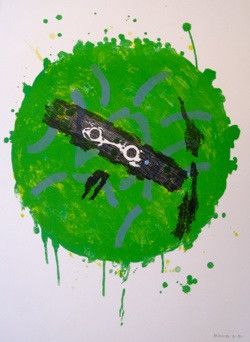
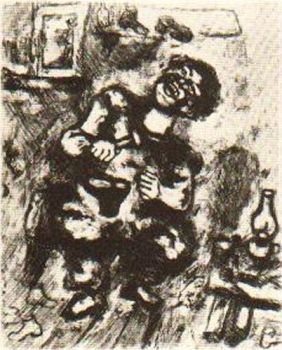
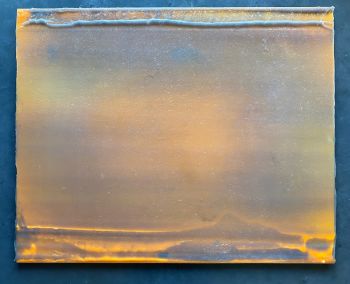
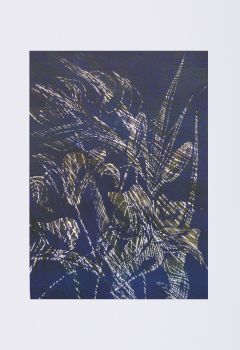
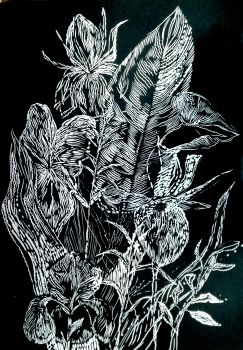
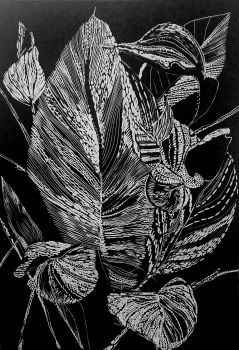
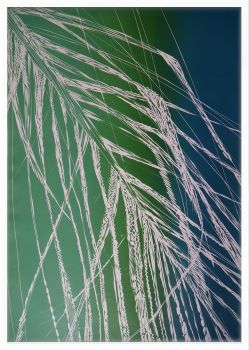
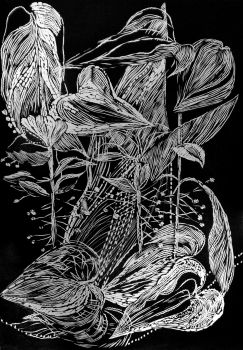
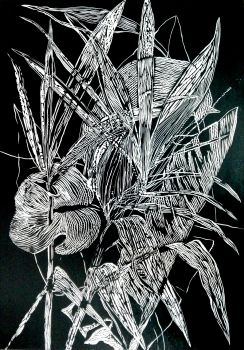
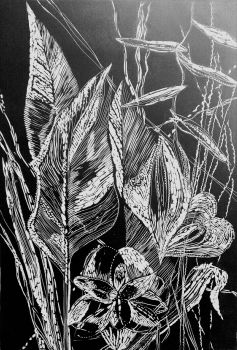
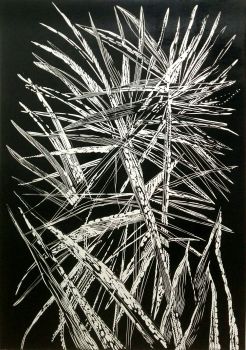
Nieuwjaarskaarten voor 1953-54-55-56 met de 4 elementen (i.o.v. Eugene en Willy Strens) 1952
Maurits Cornelis Escher
PrintLinocut
16 ⨯ 14 cm
Price on request
Bruning Heintz Fine Art
- About the artworkGedateerd Oktober 1952
Tentoonstelling M.C. Escher: His Life and Complete Graphic Work, numbers 382 to 385.
Grootte 14 x 16 cm
Materiaal Houtsnede
Provenance Particuliere collectie
De vier nieuwjaarskaarten die M.C. Escher maakte in opdracht van het Maastrichtse echtpaar Eugène en Willy Strens behoren tot zijn meest persoonlijke en speelse grafiekwerken. Ze zijn een fascinerend voorbeeld van Eschers creatieve veelzijdigheid: 1. Unieke combinatie van vriendschap en kunst Eugène Strens was wiskundige en typograaf, met een grote interesse in grafische kunst en wiskundige principes — een combinatie die hem nauw verbond met Escher. De kaarten waren geen commerciële opdrachten, maar eerder vriendschappelijke projecten. Escher kon daardoor vrij experimenteren met beeld en idee, wat resulteerde in heel persoonlijke en creatieve ontwerpen. 2. Speelse symboliek en dubbele betekenissen De kaarten bevatten vaak woordspelingen, visuele raadsels of symbolische elementen. Ze zijn niet zomaar nieuwjaarswensen, maar eerder kleine grafische puzzels of meditaties over tijd, verandering, en perspectief — allemaal thema’s die Escher ook in zijn grotere werk verkende. 3. Typische Escher-technieken in kleine vorm De kaarten tonen Eschers fascinatie met metamorfose, spiegelingen, oneindigheid en onmogelijke ruimten. In deze kleine formaatjes wist hij toch zijn karakteristieke stijl en thema’s toe te passen. Het zijn miniaturen waarin je zijn hele denken kunt terugvinden. 4. Grafische perfectie Zoals altijd bij Escher is ook hier de technische uitvoering subliem. Hij gebruikte houtsneden of houtgravures, waarbij hij veel aandacht gaf aan de typografie (vaak ontworpen door Strens) en de balans tussen beeld en tekst. 5. Voorloper van latere meesterwerken In sommige kaarten zijn elementen te herkennen die in latere, beroemde werken terugkomen — zoals optische illusies, architectonische fantasieën en wiskundige structuren. Ze zijn dus niet alleen charmante kleine werken, maar ook stapstenen in zijn artistieke ontwikkeling. DE KAARTEN ZELF WORDEN HIERONDER KORT OMSCHREVEN: 1. AARDE (Felicitas 1953), 15,5 x 13,5 cm Deze kaart toont een vlakvulling met mieren, die symbool staan voor het element aarde. Escher gebruikte symmetrische patronen met 2- en 4-tallige rotatieassen om een gevoel van stabiliteit en structuur te creëren, passend bij het aardse thema. 2. LUCHT (Felicitas 1954), 15,4 x 13,4 cm Voor het element lucht ontwierp Escher een patroon van vliegende vogels. Hij paste een verschuivingssysteem toe zonder gebruik van spiegeling of rotatie, wat een gevoel van beweging en vrijheid oproept, kenmerkend voor lucht. 3. VUUR (Felicitas 1955), 15,6 x 13,5 cm De vuurkaart bevat een dynamisch patroon van demonische figuren, weergegeven in warme kleuren zoals geel en oranje. Escher gebruikte glijspiegeling om de vurige energie en onvoorspelbaarheid van vuur te symboliseren. 4. WATER (Felicitas 1956), 15,5 x 13,5 cm Voor water koos Escher een patroon van vissen in blauw en groen. Hij maakte gebruik van rotatiesymmetrie rond een tweevoudige as in het midden van het vierkant, wat de vloeiende en cyclische aard van water weerspiegelt. - About the artist
Maurits Cornelis Escher (1898-1972) was born on the 17th of June in 1898 in Leeuwarden.
He is one of the world's most famous graphic artists. He is most famous for his so-called impossible constructions, such as Ascending and Descending, Relativity, his Transformation Prints, such as Metamorphosis I, Metamorphosis II and Metamorphosis III, Sky & Water I or Reptiles.
But he also made some wonderful, more realistic work during the time he lived and traveled in Italy. Castrovalva for example, where one already can see Escher's fascination for high and low, close by and far away. The lithograph Atrani, a small town on the Amalfi Coast was made in 1931, but comes back for example, in his masterpiece Metamorphosis I and II.
During his lifetime, M.C. Escher made 448 lithographs, woodcuts and wood engravings and over 2000 drawings and sketches.
Like some of his famous predecessors, - Michelangelo, Leonardo da Vinci, Dürer and Holbein-, M.C. Escher was left-handed. Apart from being a graphic artist, M.C. Escher illustrated books, designed tapestries, postage stamps and murals.
He was born in Leeuwarden, the Netherlands, as the fourth and youngest son of a civil engineer. After 5 years the family moved to Arnhem where Escher spent most of his youth. After failing his high school exams, Maurits ultimately was enrolled in the School for Architecture and Decorative Arts in Haarlem.
After only one week, he informed his father that he would rather study graphic art instead of architecture, as he had shown his drawings and linoleum cuts to his graphic teacher Samuel Jessurun de Mesquita, who encouraged him to continue with graphic arts.
After finishing school, he traveled extensively through Italy, where he met his wife Jetta Umiker, whom he married in 1924. They settled in Rome, where they stayed until 1935. During these 11 years, Escher would travel each year throughout Italy, drawing and sketching for the various prints he would make when he returned home.
Many of these sketches he would later use for various other lithographs and/or woodcuts and wood engravings, for example the background in the lithograph Waterfall stems from his Italian period, or the trees reflecting in the woodcut Puddle, which are the same trees Escher used in his woodcut "Pineta of Calvi", which he made in 1932.
M.C. Escher became fascinated by the regular Division of the Plane, when he first visited the Alhambra, a fourteen century Moorish castle in Granada, Spain in 1922.
During the years in Switzerland and throughout the Second World War, he vigorously pursued his hobby, by drawing 62 of the total of 137 Regular Division Drawings he would make in his lifetime.
He would extend his passion for the Regular Division of the Plane, by using some of his drawings as the basis for yet another hobby, carving beech wood spheres.He played with architecture, perspective and impossible spaces. His art continues to amaze and wonder millions of people all over the world. In his work we recognize his keen observation of the world around us and the expressions of his own fantasies. M.C. Escher shows us that reality is wondrous, comprehensible and fascinating.
Escher died in 1972 on the 27th of March.

Are you interested in buying this artwork?
Artwork details
Related artworks
- 1 - 4 / 24
- 1 - 4 / 24
- 1 - 4 / 24
- 1 - 4 / 24
Curated byDanny Bree
Erasmus Dülmen-Krumpelmann
Haarlemmerstraat bij avond1920 - 1960
Price on requestBruning Heintz Fine Art
1 - 4 / 12


![[copy] No Puedo Creerle a Nadie III by Hiroomi Ito](https://media-2.gallerease.com/images/4ae368a6-ec96-434e-9996-95a1be66f52d/350x350/copy-no-puedo-creerle-a-nadie-iii.jpg)


![“Tentation” [temptation], lithograph by Eugène Grasset](https://media-3.gallerease.com/images/b891f1b8-508a-4829-a559-a56b7f765ca7/350x350/tentation-temptation-lithograph.jpg)