Lorenz Strauch (1554–1630) was a German painter and draftsman from Nuremberg, known for his refined portraiture and his contributions to the transition from late Renaissance to early Baroque painting styles in southern Germany.
Born in 1554 in Nuremberg—then a flourishing center of art, science, and humanism—Strauch grew up in a city that still breathed the spirit of Albrecht Dürer. He received a classical education in drawing and painting, probably from local masters who upheld the ideals of precision, symbolism, and technical skill.
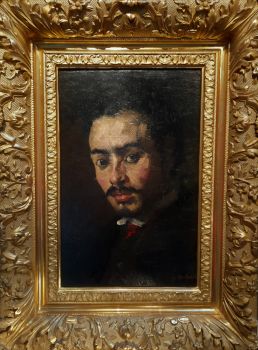
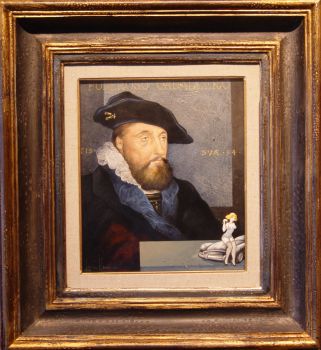
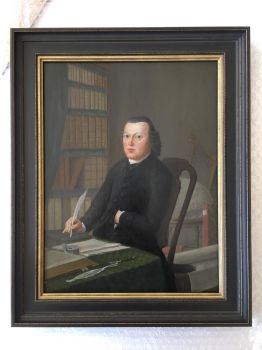
Strauch specialized early on in portraiture, a genre that was becoming increasingly important in his time as an expression of status, scholarship, and virtue. His work was distinguished by the careful characterization of his models: he painted not ideals, but real people—sometimes seriously, sometimes with a touch of irony. His keen eye for detail, from the sheen of a silver buckle to the play of light on a lace collar, made his portraits beloved by the Nuremberg elite.
In addition to portraiture, Lorenz Strauch also made allegorical and religious works, often commissioned by churches and guilds. In these, he combined the elegant forms of the Renaissance with the dramatic effects of light that heralded the early Baroque. His work shows a subtle but clear transition: away from formal serenity, towards more movement, emotion and depth.
Strauch was not only an artist, but also a mentor. During his long career, he trained several young artists, including his own son, and he played a role in maintaining Nuremberg's status as an art center in a period of political and religious unrest.
He remained active in Nuremberg for most of his life, dying there in 1630. Today his works are mainly found in regional museums and churches in Bavaria, where they form a silent but convincing testimony to an artist who managed to capture the human presence in paint and who built a bridge between two great artistic eras.