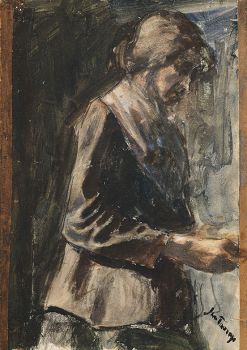
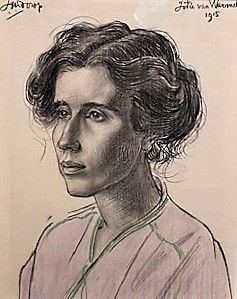
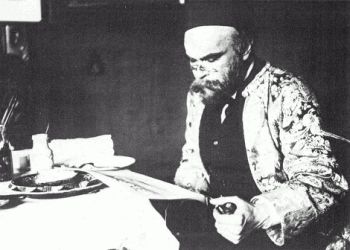
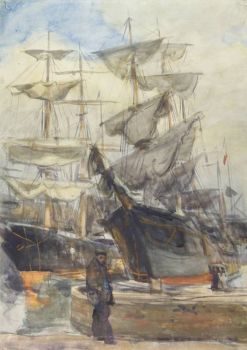
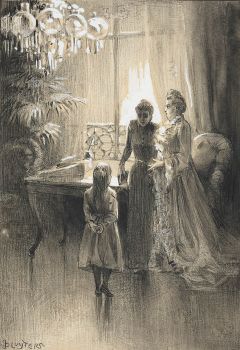
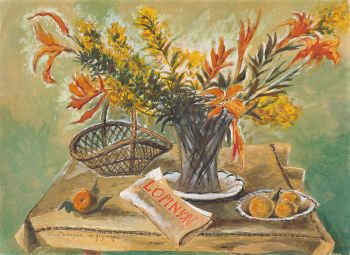
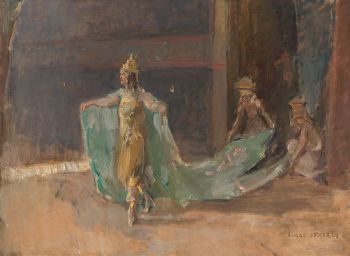
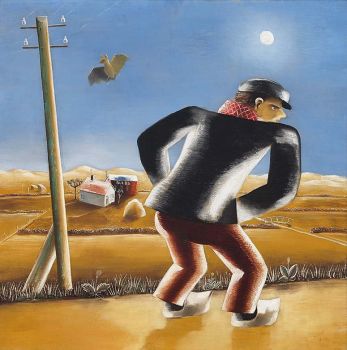
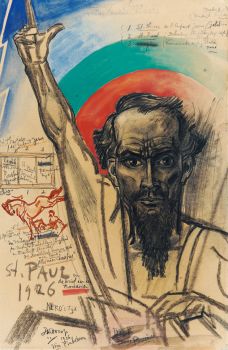
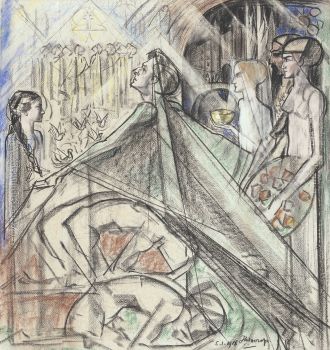
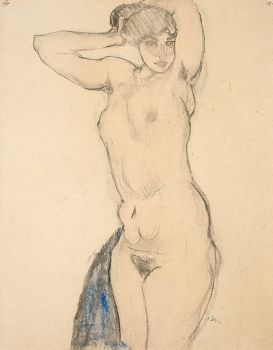
Johannes Theodorus (Jan) Toorop (Poerworedjo, Java, 20 December 1858 – The Hague, 3 March 1928) was a Dutch painter who became known for his versatile style and influence on European art movements at the end of the 19th and the beginning of the 20th century. His work included symbolism, art nouveau and pointillism.
Early Life and Education
Toorop was born in Poerworedjo on the island of Java in the Dutch East Indies (present-day Indonesia). His father, Christoffel Theodorus Toorop, was a Dutch civil engineer, and his mother, Maria Magdalena Cooke, had Javanese and possibly Chinese roots. At the age of nine, he was sent to the Netherlands for his education, where he studied in Delft and Amsterdam. In 1880, he became a student at the Rijksakademie van beeldende kunsten in Amsterdam.
Career and Artistic Development
In 1882 Toorop moved to Brussels, where he joined the artists' association L'Essor and later Les XX, a group of avant-garde artists around James Ensor. During this period he experimented with different styles, including realism, impressionism and neo-impressionism.
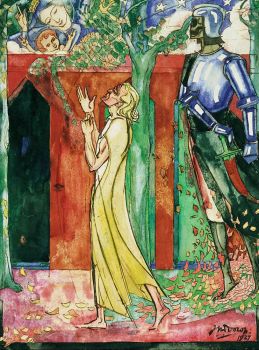
After his marriage to the British Annie Hall in 1886, Toorop divided his time between the Netherlands, Belgium and England. Around 1890 he developed a unique symbolist style, characterised by dynamic lines and influences from Javanese art. His best-known work from this period is probably the poster for Delftsche Slaolie from 1894, which became an iconic example of Art Nouveau.
Later Years and Influence
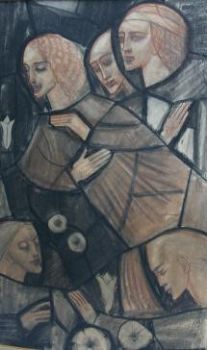
In 1905 Toorop converted to Catholicism, which had a profound effect on his later work. He created numerous religious works of art, including paintings, stained glass windows and book illustrations. His daughter, Charley Toorop, also became a prominent painter, and his grandson, Edgar Fernhout, continued the artistic tradition.
Jan Toorop died on 3 March 1928 in The Hague. His legacy lives on in the diverse styles and techniques he explored during his career, and his work remains an important influence in Dutch and European art history.