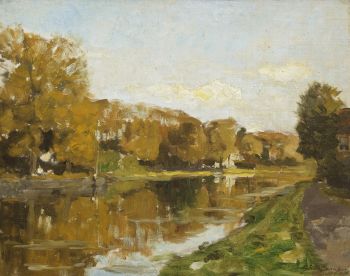
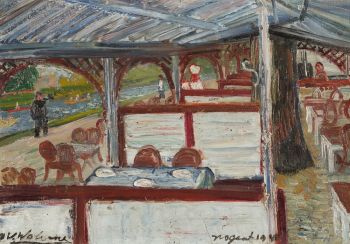
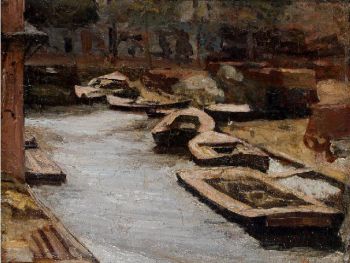
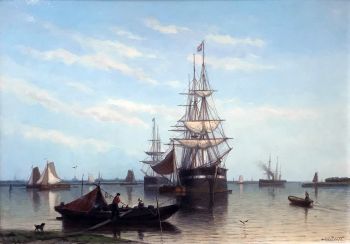
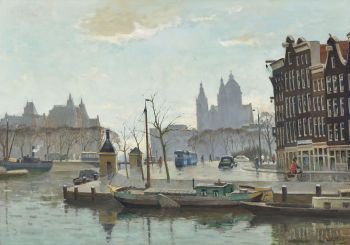
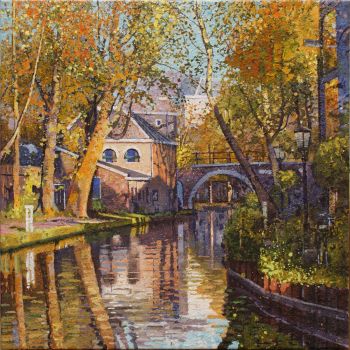
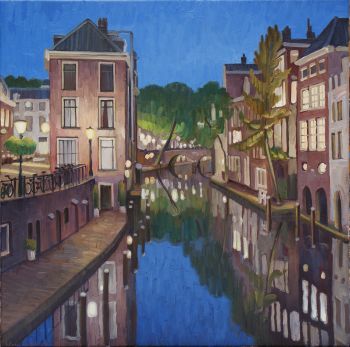
Jan Ouwersloot (Gouda, 27 October 1902 – Amsterdam, 27 May 1975) was a Dutch self-taught painter, watercolourist, draftsman, pen artist, pastellist, etcher and lithographer. He is known for his realistic and naive-realistic depictions of cityscapes, street scenes, harbours and landscapes, often inspired by his immediate surroundings.
Ouwersloot is considered to belong to the movement of the 'Populists', a group of artists who were active in Utrecht and Amsterdam in the 1930s. This group, which included Louis Schrikkel, Jan Strube and Johan van Hell, aimed to capture everyday subjects in an accessible way in order to appeal to a wide audience.
From 1927 to 1964 Ouwersloot was a member of the Amsterdam artists' association 'De Onafhankelijken'. Within this association he exhibited regularly and contributed to the artistic dialogue of that time. His work has been exhibited in the Stedelijk Museum Amsterdam, among others.
Ouwersloot's paintings are characterized by a naive-realistic style, in which he often created topographical fantasy representations. For example, he playfully combined various sights from the Amsterdam streetscape in one composition. Despite his contributions to Dutch art, Ouwersloot was somewhat forgotten after his death. Recently, there has been renewed interest in his work, among other things through exhibitions in Museum MORE.
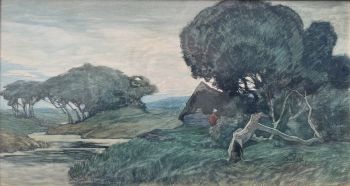
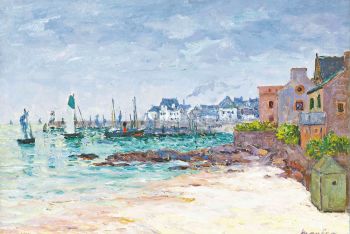
His oeuvre covers a wide range of subjects, from cityscapes and landscapes to harbors and street scenes. His works often radiate a nostalgic atmosphere and offer a unique perspective on everyday life in the Netherlands during the first half of the 20th century.