Jan Sluijters Jr. was born on January 9, 1914, in Amsterdam, the son of the celebrated painter Jan Sluijters and Greet van Cooten. From an early age, he was immersed in the world of art and creativity. He received his first drawing and painting lessons from his father, but this proved difficult. The lessons were difficult, and to provide him with more structure and freedom, he was sent to the Rijksnormaalschool voor Teekenonderwijs (National School for Drawing Education) and later the Rijksakademie van Beeldende Kunsten (National Academy of Fine Arts). He also studied with the painter Hendrik Adriaan van der Wal. These choices offered him the opportunity to develop his own style, independent of his father's direct influence.
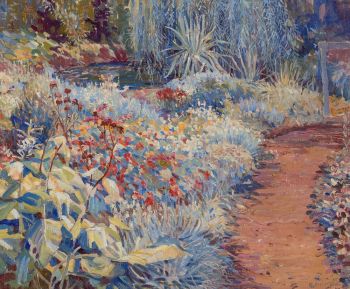
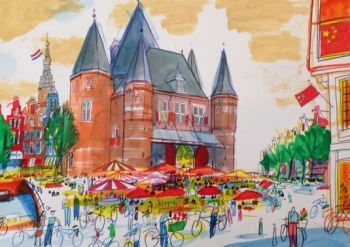
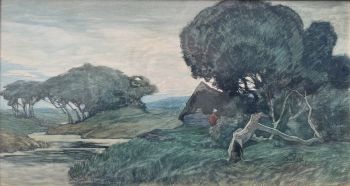
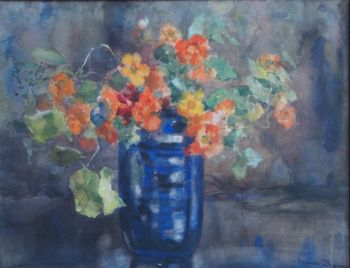
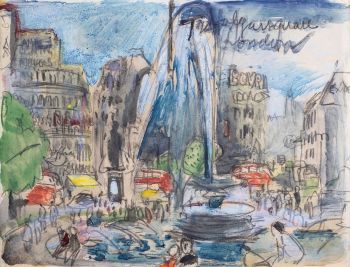
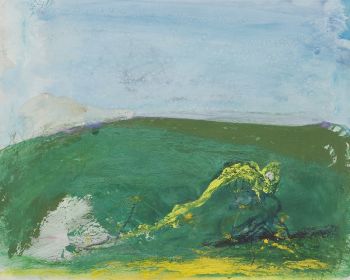
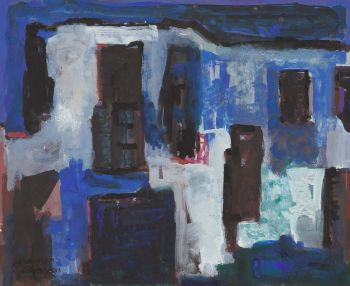
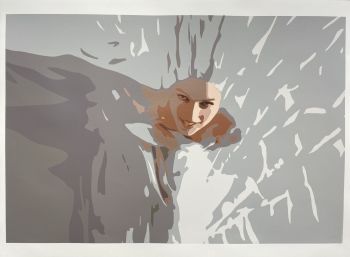
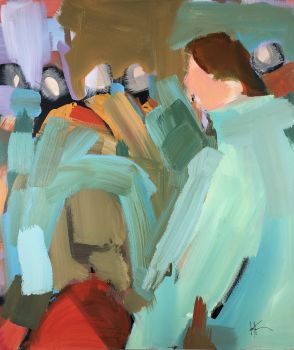
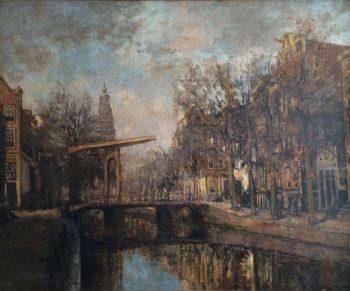
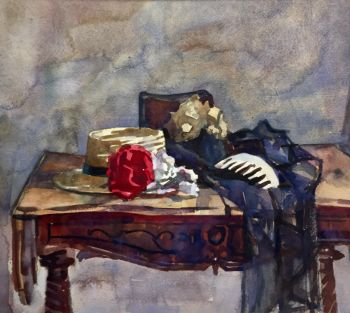
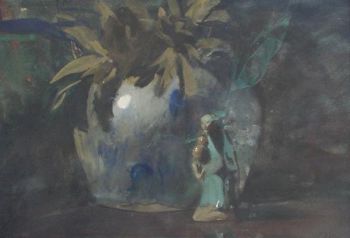
Unlike his father, who was known for his innovative, sometimes radical stylistic shifts, Jan Jr. developed a more naturalistic and impressionistic approach. His work is characterized by a softer, pastel-colored palette and a refined atmosphere, often with greater dynamism in cityscapes and landscapes. He painted and drew diverse subjects: cityscapes, interiors, still lifes, architecture, and landscapes. His style was sometimes called impressionistic, with subtle expressionist accents. Besides his painting, he had a strong interest in technology. He experimented with film and worked with 8mm cameras. Through his father, he met documentary filmmaker Mannus Franken, with whom he was able to explore the world of film up close.
From 1936 onward, Sluijters Jr. began traveling extensively. France was a major destination for a long time, but between 1956 and 1959 he spent extended periods in Italy, Spain, and Morocco. On these trips, he brought along heavy equipment, always seeking new impressions and inspiration. Besides his travels abroad, he lived and worked in various places in the Netherlands. He worked for a long time in Amsterdam, but later also settled in Baambrugge, Loenersloot, and 's-Graveland. In these areas, he found many of his subjects: river views, country houses, farms, and the Dutch landscape.
Jan Jr. He regularly sold his work and built a modest but loyal following. He joined artists' associations such as Arti et Amicitiae and Sint Lucas in Amsterdam and was also involved with the Rembrandt Society. He twice won the Willink van Collen Prize, an important incentive prize for young painters. He also taught Pieter Apol and Gé Terhorst, among others, and thus passed on his knowledge and craftsmanship to a subsequent generation of artists.
In his later years, Jan Jr. moved to Hilversum, where he died in June 2005. He left behind an extensive and versatile oeuvre, consisting of paintings, drawings, and watercolors that still circulate in private collections and at auctions. His work, with titles such as "View of the IJ," "Interior of an Old Canal House," and "Thaw at Loenersloot," demonstrates that he carved out a unique place for himself within twentieth-century Dutch painting.
Although Jan Sluijters Jr. never achieved the fame of his father, he developed into a skilled artist with a distinctive voice. His work exudes tranquility, atmosphere, and a certain stillness, distinguished by its subtle use of color and sense of movement. His travels, technical experiments, and love of painting testify to a curious mind that felt connected to art throughout his life. His legacy is a valuable addition to the Dutch art landscape of the twentieth century, and his oeuvre demonstrates that even in the shadow of a great artist, a unique, authentic artistic path is possible.