Jakob Nieweg, born on 26 May 1877 in Hogebeintum, Friesland, was a Dutch minister who later became famous as a painter. As the son of a minister, he spent his youth in various parsonages in Friesland, Drenthe and Groningen. During his grammar school years in Groningen he took drawing lessons at the Academie Minerva, which aroused his interest in painting.
After grammar school, Nieweg studied theology at the Rijksuniversiteit Groningen, where he obtained his doctorate in 1905 with a dissertation on the Anglican theologian Frederick William Robertson. During his studies he came into contact with the painter and art pedagogue H.P. Bremmer, who had a lasting influence on his artistic development. Bremmer introduced him to the work of innovative artists such as Vincent van Gogh, Jan Toorop and Piet Mondriaan.
In 1905 Nieweg married Neine Geertruida van der Meulen and began his career as a minister in Ter Apel. Despite his busy schedule, he continued to draw and paint in his spare time. In 1914, partly on the advice of Bremmer and his friend, the painter and critic Just Havelaar, he decided to resign from his position and devote himself entirely to painting. He moved with his family to Bloemendaal and later to Amersfoort, where he founded the Amersfoort Art Circle in 1919.
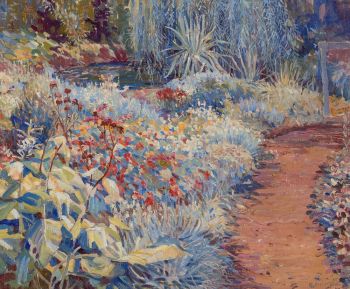
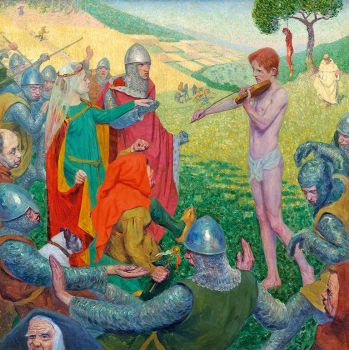
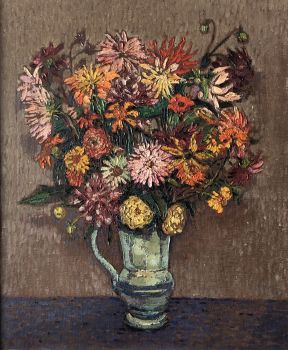
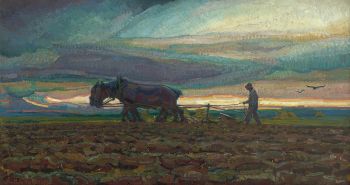
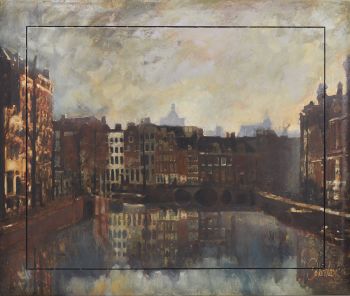
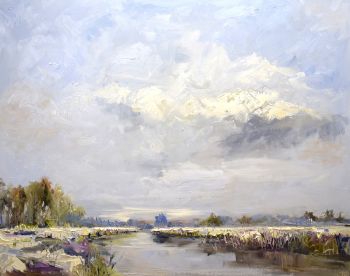
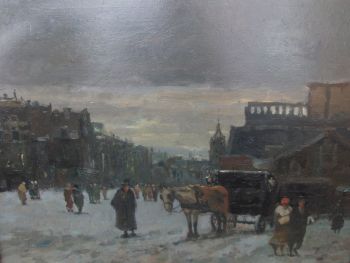
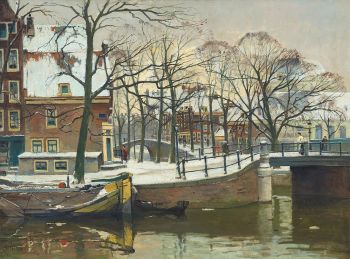
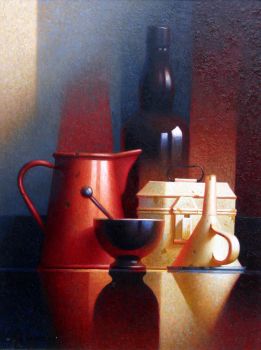
Nieweg developed his own style, characterised by detailed pointillism and a subdued use of colour. His works radiate a tranquil tranquillity and show the beauty of everyday subjects. He mainly painted still lifes, landscapes and cityscapes, often opting for simple compositions that radiate a timeless serenity.
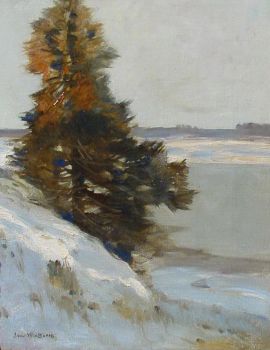
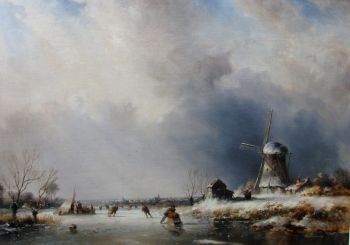
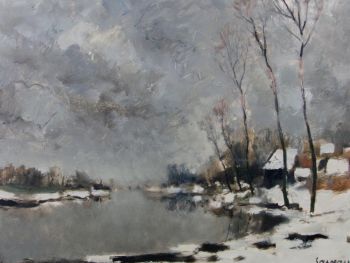
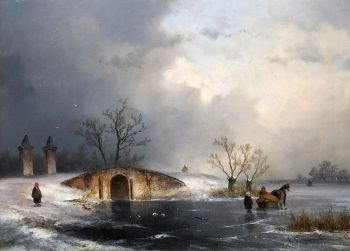
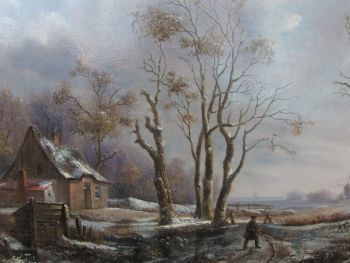
A striking part of his oeuvre are the pointillist snow scenes, often situated in Amersfoort, where he lived from 1919. These works show tranquil depictions of snowy landscapes and village scenes, depicted in subtle purple and grey tones. The swirling snowflakes contribute to the serene atmosphere that characterizes his paintings.
During the Second World War, Nieweg refused to become a member of the Kultuurkamer, which meant that he could no longer exhibit. He temporarily resumed his work as a preacher and became involved in the resistance. After the liberation, he returned to painting, but the artistic climate in the Netherlands had changed, and there was less interest in his work. However, he remained true to his own style and continued to work daily in his studio until his death on 4 August 1955 in Amersfoort.
Jakob Nieweg left behind an extensive and varied oeuvre that testifies to his dedication to painting and his ability to capture the beauty of the everyday. His work is still appreciated for its tranquil, timeless quality and subtle rendering of light and color.