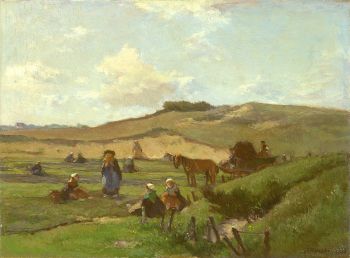
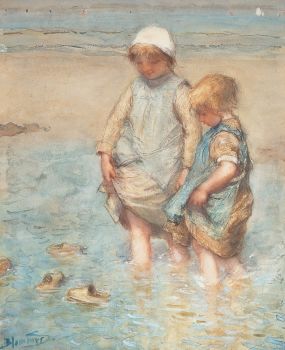
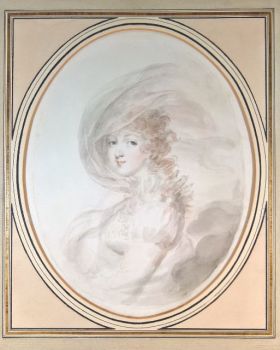
"Zeeuws meisje in de duinen bij Domburg" by Jim Frater
Scroll to zoom, click for slideshow

"Zeeuws meisje in de duinen bij Domburg" 1913

Jim Frater

Watercolour
21 ⨯ 26 cm
Price on request

Galerie Het Noorderlicht
  • About the artwork
    Aquarel op papier
    21,0 x 26,8 cm
    gesigneerd en gedateerd linksonder
  • About the artist
     James William “Jim” Frater (1887–1969) was a versatile Dutch painter, watercolorist, sculptor, pastellist, and pen artist best known for his atmospheric landscapes, cityscapes, and figurative works. Born in Vlissingen as the son of a Scottish clergyman, Frater spent part of his youth in Belgium before studying at the academies of Brussels and Kortrijk. He later continued his artistic education in Paris, where he came into contact with both Impressionist and Symbolist influences that would shape his artistic language throughout his career.

    Frater became closely associated with the renowned artists’ colony of Domburg in Zeeland, where he worked alongside important Dutch modernists such as Jan Toorop and Piet Mondriaan. The Zeeland landscape, with its dunes, beaches, villages, markets, and coastal atmosphere, became one of the central inspirations in his oeuvre. His works are characterized by a refined sense of light, subtle color harmonies, and a poetic interpretation of everyday life.

    Working across a wide range of media — including oil painting, watercolor, gouache, pastel, drawing, and sculpture — Frater developed a highly personal style that balanced realism with impressionistic sensitivity. His cityscapes, harbor scenes, portraits, and rural compositions often evoke a quiet intimacy and timeless atmosphere, reflecting both Dutch artistic traditions and broader European modernist currents.

    Although never seeking the spotlight, Frater maintained a respected position within Dutch art circles during the first half of the twentieth century. He lived and worked in several places across the Netherlands and Belgium before eventually settling in Baarn, where he passed away in 1969. Today, his work is appreciated for its craftsmanship, lyrical atmosphere, and its evocative portrayal of Dutch life and landscape in the early twentieth century.

Are you interested in buying this artwork?

Artwork details

Category
Subject
Style
Material & Technique
Colour