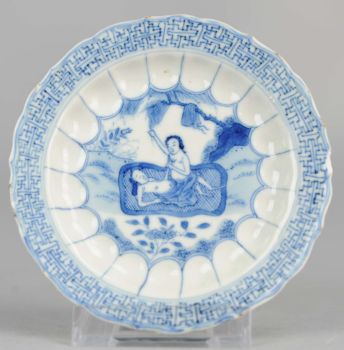
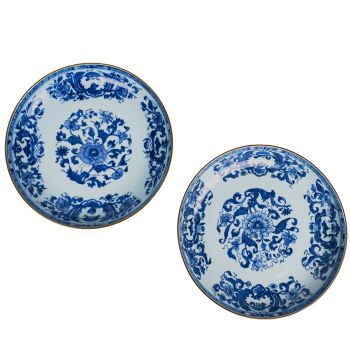
A blue and white ‘Sense of Smell’ dish, Kangxi mark and period, ca. 1700 1700
Artista Sconosciuto
6.40 cm, ø 34.50 cm
ConditionGood
Prezzo su richiesta
Menken Works of Art
Sei interessato ad acquistare questa opera d'arte?
Related artworks

Artista Sconosciuto
A Chinese famille verte ‘fishermen’ bowl, Kangxi period (1662-1722)1662 - 1722
Prezzo su richiestaMenken Works of Art

Artista Sconosciuto
A Chinese powder-blue-ground blue and white ‘Budai’ dish, Kangxi period1662 - 1722
Prezzo su richiestaMenken Works of Art


Artista Sconosciuto
A Chinese porcelain blue and white 'Mantou Xin' bowl, Kangxi period (1661-1722)1700 - 1720
Prezzo su richiestaMenken Works of Art

Artista Sconosciuto
Set Arita 'dog training' plates, 18th century 1700 - 1730
Prezzo su richiestaVerkoulen Oriental & European Antiques
Artista Sconosciuto
A Chinese powder-blue-ground blue and white ‘Budai’ dish, Kangxi period1662 - 1722
Prezzo su richiestaMenken Works of Art

Artista Sconosciuto
A rare Chinese blue and white bottle vase, Ming dynasty, Wanli period1573 - 1620
Prezzo su richiestaMenken Works of Art
Artista Sconosciuto
A Chinese famille verte ‘fishermen’ bowl, Kangxi period (1662-1722)1662 - 1722
Prezzo su richiestaMenken Works of Art


Artista Sconosciuto
A Chinese famille verte ‘fishermen’ bowl, Kangxi period (1662-1722)1662 - 1722
Prezzo su richiestaMenken Works of Art
Artista Sconosciuto
A Chinese famille verte ‘fishermen’ bowl, Kangxi period (1662-1722)1662 - 1722
Prezzo su richiestaMenken Works of Art
Artista Sconosciuto
A Chinese powder-blue-ground blue and white ‘Budai’ dish, Kangxi period1662 - 1722
Prezzo su richiestaMenken Works of Art
Artista Sconosciuto
A rare Chinese blue and white bottle vase, Ming dynasty, Wanli period1573 - 1620
Prezzo su richiestaMenken Works of Art
Artista Sconosciuto
A Chinese powder-blue-ground blue and white ‘Budai’ dish, Kangxi period1662 - 1722
Prezzo su richiestaMenken Works of Art


Artista Sconosciuto
A pair of Dutch Colonial Solid Satinwood Chairs, Ceylon 18th century1725 - 1750
Prezzo su richiestaMenken Works of Art
Artista Sconosciuto
A Chinese famille verte ‘fishermen’ bowl, Kangxi period (1662-1722)1662 - 1722
Prezzo su richiestaMenken Works of Art

Artista Sconosciuto
Two large Chinese carved wooden architectural wall panels, Qing dynasty, 19th century19th century
Prezzo su richiestaMenken Works of Art
Artista Sconosciuto
A Chinese powder-blue-ground blue and white ‘Budai’ dish, Kangxi period1662 - 1722
Prezzo su richiestaMenken Works of Art