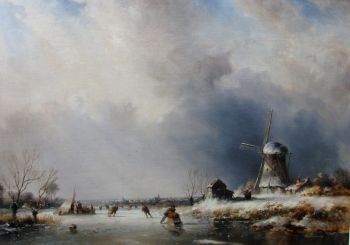
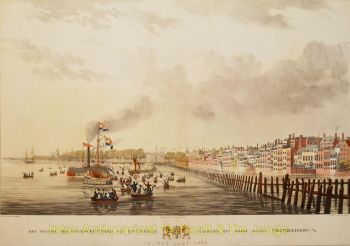
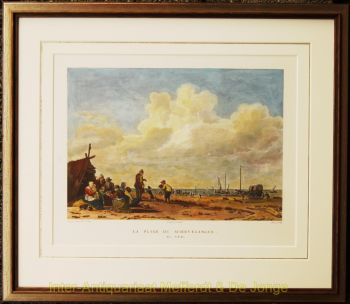
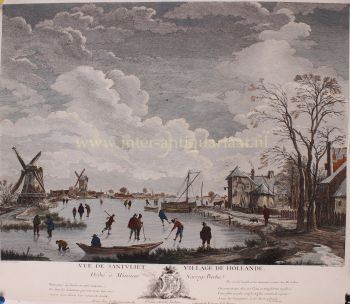
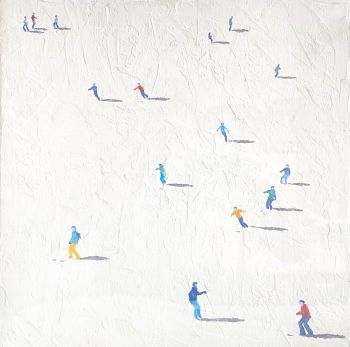
Kolf on the Haarlemmermeer - after Adriaen van de Velde, ca. 1770 by Artista Sconosciuto
Scroll to zoom, click for slideshow

Kolf on the Haarlemmermeer - after Adriaen van de Velde, ca. 1770 1770

Artista Sconosciuto

Carta
31.50 ⨯ 36.50 cm
€ 1.750

Inter-Antiquariaat Mefferdt & De Jonge

  • A proposito di opere d'arte
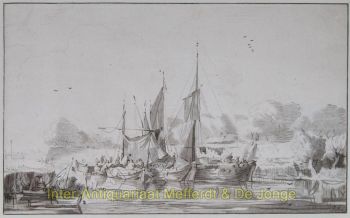
    “L’Amusemens De L’Hiver”, copper engraving by Jacques Aliamet (1726 – 1788) after a painting by Adriaen van de Velde. Published in Paris around 1770. Coloured by a later hand. Size (scene) approx. 31.5 x 36.5 cm. Winter scenes with a thick layer of snow and frozen canals and rivers full of joy on the ice have always been popular. The old masters liked painting them, and their popularity is reflected in the large number of prints made after their paintings and drawings. Even in the 19th century, engravers looked back to examples from the past, in France, Germany, and England. We see a group of men playing kolf on the Haarlemmermeer, a sport played in the Low Countries since the Middle Ages. In the 17th and 18th centuries, kolf gained popularity. The game was usually played in everyday shoes in the midst of the other people on the ice. Sometimes a kolf stick with a weighted and widened lower end was used, no longer than our current golf clubs. Other times, players wore skates, and the stick reached chest height, with the upper end covered with velvet or other material. Sometimes the goal was to hit the ball as far as possible or to strike a pole. The score was kept on the inside of the hat or carved with a knife on a twig. The ball was made of leather and filled with feathers. In the distance, the Grote Kerk or St.-Bavo church towers above the city of Haarlem. Price: Euro 1.750,- (incl. frame)
  • A proposito di opere artista

    Può succedere che un artista o un creatore sia sconosciuto.

    Alcune opere non sono determinate da chi sono state realizzate o sono state realizzate da (un gruppo di) artigiani. Esempi sono statue dell'antichità, mobili, specchi o firme non chiare o leggibili ma anche alcune opere non sono affatto firmate.

    Inoltre puoi trovare la seguente descrizione:

    •"Attribuito a …." A loro avviso probabilmente opera dell'artista, almeno in parte

    •“Studio di ….” o “Officina di” A loro avviso un'opera eseguita nello studio o nella bottega dell'artista, eventualmente sotto la sua supervisione

    •“Cerchio di…” A loro avviso un'opera del periodo dell'artista che mostra la sua influenza, strettamente legata all'artista ma non necessariamente al suo allievo

    •"Stile di..." o "Seguace di..." A loro avviso un'opera eseguita nello stile dell'artista ma non necessariamente da un allievo; può essere contemporaneo o quasi contemporaneo

    •“Modalità di…” A loro avviso un'opera nello stile dell'artista ma di epoca successiva

    •"Dopo …." A loro avviso una copia (di qualsiasi data) di un'opera dell'artista

    •“Firmato…”, “Datato…” o “Iscritto” A loro avviso l'opera è stata firmata/datata/inscritta dall'artista. L'aggiunta di un punto interrogativo indica un elemento di dubbio

    •"Con firma....", "Con data...", "Con iscrizione..." o “Riporta firma/data/iscrizione” a loro avviso la firma/data/iscrizione è stata aggiunta da qualcuno diverso dall'artista

Sei interessato ad acquistare questa opera d'arte?

Artwork details