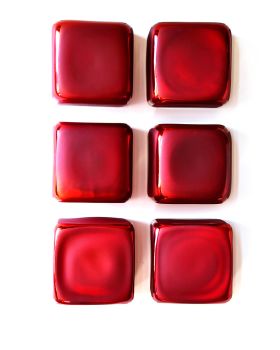
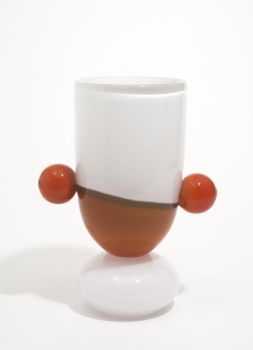
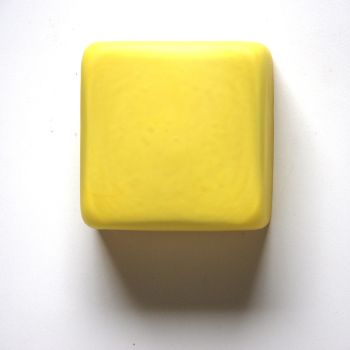
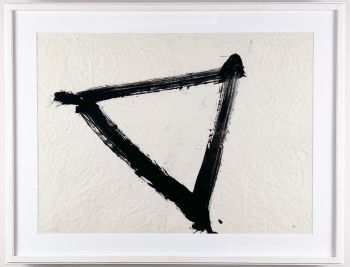
‘Piatti di Tapio’, model 511.41 – Venini, Italy 1986
Tapio Wirkkala
Bicchiere
48 cm, ø 39 cm
ConditionVery good
€ 3.200
Van Kerkhoff Art
- A proposito di opere d'arteA large art-object, ‘Piatti die Tapio’, model 511.41, crafted in freeblown pale yellow, amethist, blue and red glass. Designed by the renowned Tapio Wirkkala in 1967, this rare piece was brought to life by the skilled craftsmen of the Venini glassworks on the island of Murano in Venice in 1986.
This particular object was made using Incalmo, murrine inclusion and freeblown glass. The base is formed using pale yellow glass with a amethist inserted centre, with a multicoloured ‘Murrine’. This piece is signed in diamondpen on the reverse: Venini TW 1986.
About Tapio Wirkkala
Tapio Wirkkala (1915 Hanko, Finland – 1985 Helsinki, Finland) A giant of Finnish design, possessed an extraordinary creative spirit that knew no boundaries. His artistic repertoire traversed diverse materials and transcended conventional design disciplines, leaving an indelible mark on the world of art and craftsmanship.
The trajectory of Wirkkala’s illustrious career was set in motion by a momentous glass design competition held by the revered Iittala glassworks in 1946. It was during this transformative event that Wirkkala, alongside the esteemed Kaj Franck, emerged as the joint recipients of the first prize. This recognition propelled Wirkkala into the spotlight, setting the stage for his remarkable artistic journey.
Wirkkala’s creative genius knew no bounds. His oeuvre spanned a vast spectrum, encompassing exceptionally beautiful glass art pieces, innovative industrial designs such as beer bottles and banknotes, meticulously crafted jewelry, evocative sculptures, and thoughtfully designed furniture. Each creation bore the unmistakable imprint of Wirkkala’s artistic prowess, showcasing his mastery over form, function, and aesthetics.
Throughout his illustrious career, Wirkkala amassed a multitude of accolades, honorary titles, and a doctorate, cementing his position as one of the most revered figures in the design world. His remarkable achievements include three Grand Prix medals at the prestigious Milan Triennale in 1954, followed by yet another Grand Prix medal and gold medal at the Milan Triennale in 1960. These prestigious awards not only celebrated Wirkkala’s unrivaled talent but also underscored his profound impact on the global design landscape.
Wirkkala’s creative journey was an embodiment of innovation, pushing the boundaries of design and challenging conventional norms. His unparalleled ability to infuse beauty into everyday objects and elevate them to the realm of art garnered admiration and acclaim from enthusiasts and experts alike.
Today, we celebrate Tapio Wirkkala as a visionary pioneer who seamlessly merged artistry with functionality. His enduring legacy serves as a testament to the limitless possibilities of design, inspiring generations of artists and designers to think beyond the confines of tradition and embrace their creative instincts.
Marked
Signed in diamondpen: Venini TW (Tapio Wirkkala) 86 (1986)
Execution
Venini, Murano 1986
Condition
Very good condition, no chips or cracks. Some very light scratches.
Literature
Marino Barovier and Carla Sonego (ed.), Tapio Wirkkala at Venini
Dimensions
Height including stand 48 cm
Diameter 39,2 cm - A proposito di opere artista
Tapio Wirkkala (1915-1985) è stato un poliedrico genio del design, ampiamente considerato una figura di spicco della moderna arte industriale finlandese. L'ampio portafoglio di Wirkkala spazia dal vetro, mobili e design di prodotti alla scultura, all'urbanistica, all'arte, alla grafica e persino alla creazione di banconote per il tesoro finlandese.
Nel corso della sua carriera incredibilmente produttiva, Wirkkala ha ricevuto numerosi premi tra cui tre medaglie d'oro alla Triennale di Milano, il Premio Lunning, la Medaglia Pro Finlandia e la Medaglia Prince Eugen.
Nel 1946, Wirkkala vinse il suo primo premio di design in un concorso sponsorizzato da Iittala che avrebbe segnato un rapporto duraturo con effetti duraturi sulla sua carriera e sull'azienda. In qualità di direttore artistico di Iittala, la visione artistica unica di Wirkkala ha contribuito a stabilire la reputazione globale dell'azienda.
Nel corso della sua leggendaria carriera, l'artista dal talento unico ha creato più di quattrocento oggetti in vetro per Iittala, molti dei quali, come le serie Ultima Thule e Tapio, sono tuttora popolari.
Sei interessato ad acquistare questa opera d'arte?
Artwork details
Related artworks
Tapio Wirkkala
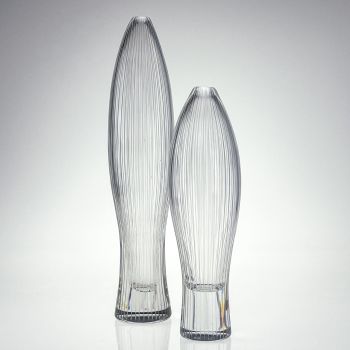
Two rare Art-objects, model 3585 & 3586 – Iittala, Finland1956
Prezzo su richiestaVan Kerkhoff Art
1 - 4 / 12Poul Henningsen
A copper ‘PH Artichoke’ pendant – Louis Poulsen, Denmark2000 - 2010
Prezzo su richiestaVan Kerkhoff Art
Tapio Wirkkala
Two rare Art-objects, model 3585 & 3586 – Iittala, Finland1956
Prezzo su richiestaVan Kerkhoff Art
Kurt Østervig
A Brazilian rosewood sideboard with bar – KP Møbler, Denmark1960 - 1969
Prezzo su richiestaVan Kerkhoff Art
1 - 4 / 24Kaj Franck
A complete set of glass Art-Object “Pilari”, Model KF249 & KF250 – Nuutajärvi-Notsjö, Finland1958 - 1960
Prezzo su richiestaVan Kerkhoff Art
Johann Loetz (Lötz) Witwe Klostermühle
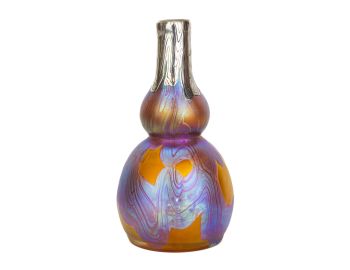
Johann Loetz Witwe – Phänomen Genre 299 – Tricolor vase1900 - 1902
Prezzo su richiestaAntiques Emporium
Daum Nancy
Daum Nancy – Tall Bryones / Bryonia dioica vase with applied berries1902 - 1907
Prezzo su richiestaAntiques Emporium
1 - 4 / 24Johann Loetz (Lötz) Witwe Klostermühle
Johann Loetz Witwe – Phänomen Genre 1/18 vase1901 - 1905
Prezzo su richiestaAntiques Emporium
Artista Sconosciuto
EIGHT NEO-GOTHIC STAINED GLASS WINDOWS WITH SUSPENSION EYELET, 19th C, BELGIUM.1850 - 1900
Prezzo su richiestaSpectandum Gallery
1 - 4 / 24Juul Neumann
untitled, 1959 – oil on canvas, profesionally framed1959
Prezzo su richiestaVan Kerkhoff Art
Kurt Østervig
A Brazilian rosewood sideboard with bar – KP Møbler, Denmark1960 - 1969
Prezzo su richiestaVan Kerkhoff Art
Poul Henningsen
A copper ‘PH Artichoke’ pendant – Louis Poulsen, Denmark2000 - 2010
Prezzo su richiestaVan Kerkhoff Art
1 - 4 / 12