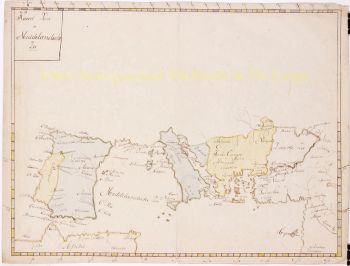
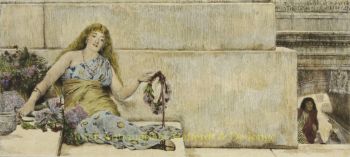
Victory of the Veronese over the Gardesans - Gaetano Zancon after Bruzasorzi, end 18th century by Artista Sconosciuto
Scroll to zoom, click for slideshow

Victory of the Veronese over the Gardesans - Gaetano Zancon after Bruzasorzi, end 18th century late 18th

Artista Sconosciuto

CartaMatita colorata
29 ⨯ 65 cm
€ 1.250

Inter-Antiquariaat Mefferdt & De Jonge

  • A proposito di opere d'arte
    VICTORY OF THE VERONESE OVER THE GARDESANS – ANTEDATING VERONA’S AUTONOMY “Battaglia e Vittoria Riportata tra Sermione e Rivoltella alla Villa Arriga da Veronesi l’anno 849 sopra que della Rivera di Salo“ (Battle and victory achieved between Sirmione and Rivoltella at Villa Arriga by the Veronese in the year 849 along the shores of Lake Garda near the Salò area). Drawing in sepia and engraving, both made at the end of the 18th century by Gaetano Zancon after a painting by Felice Riccio (Brusasorzi) (1542-1605). Size (each): 29,3 x 65,3 cm. The depicted scene marks the first triumph of the city of Verona. Two coats of arms spot the Veronese troops: the Palazzo di Teodorico on the left standard and the Veronese flag in the center which is being waved as a sign of victory over the rebelling Gardesans. Brusasorzi’s (very large) painting was commissioned in 1595 to celebrate the illustrious deeds and fortunate events of the city and now (since 1950) hangs in Palazzo Barbieri, the town hall of Verona. The historical context to which the scene refers, a mere invention, is that of the autonomy of the Garda judiciary in the Carolingian era. According to the story that emerged in late-sixteenth-century Verona, in the mid-ninth century, a revolt of the Garda populations, previously subject to Verona, would have occurred. Veronese forces would have suppressed the revolt, and during this war, they supposedly adopted the new city emblem, a yellow cross on a blue field (waved in the centre of the scene), replacing the red cross on a white field. In fact, the replacement of the emblems dates back to 1259-60. The first manifestation of the autonomy and awareness of the city commune is thus antedated four centuries earlier. The specific objective is evidently to emphasize the original subjection of the Garda territory to the city, challenging the autonomy and privileges that the communities of that territory (especially those along the shore, constituting the so-called “Gardesana dell’Acqua”) had consistently claimed during the Venetian era in which the painting was made. The fact that Geatano Zancon (1771-1816) copied the painting two hundred years later, suggests that the triumph of Verona continued to be a remarkable event -whether fiction or not- that should make every Veronese proud. Here we have both the engraving as well as Zancon’s original drawing after the painting (which he needed to make the engraving). Price: Euro 1.250,- (for both the drawing and the engraving)
  • A proposito di opere artista

    Può succedere che un artista o un creatore sia sconosciuto.

    Alcune opere non sono determinate da chi sono state realizzate o sono state realizzate da (un gruppo di) artigiani. Esempi sono statue dell'antichità, mobili, specchi o firme non chiare o leggibili ma anche alcune opere non sono affatto firmate.

    Inoltre puoi trovare la seguente descrizione:

    •"Attribuito a …." A loro avviso probabilmente opera dell'artista, almeno in parte

    •“Studio di ….” o “Officina di” A loro avviso un'opera eseguita nello studio o nella bottega dell'artista, eventualmente sotto la sua supervisione

    •“Cerchio di…” A loro avviso un'opera del periodo dell'artista che mostra la sua influenza, strettamente legata all'artista ma non necessariamente al suo allievo

    •"Stile di..." o "Seguace di..." A loro avviso un'opera eseguita nello stile dell'artista ma non necessariamente da un allievo; può essere contemporaneo o quasi contemporaneo

    •“Modalità di…” A loro avviso un'opera nello stile dell'artista ma di epoca successiva

    •"Dopo …." A loro avviso una copia (di qualsiasi data) di un'opera dell'artista

    •“Firmato…”, “Datato…” o “Iscritto” A loro avviso l'opera è stata firmata/datata/inscritta dall'artista. L'aggiunta di un punto interrogativo indica un elemento di dubbio

    •"Con firma....", "Con data...", "Con iscrizione..." o “Riporta firma/data/iscrizione” a loro avviso la firma/data/iscrizione è stata aggiunta da qualcuno diverso dall'artista

Sei interessato ad acquistare questa opera d'arte?