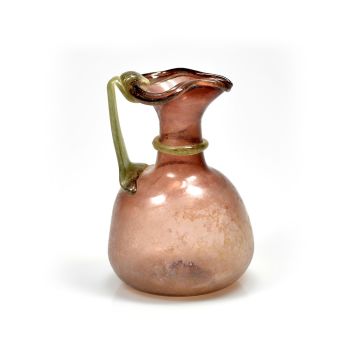
Johann Loetz Witwe – Ausfuehrung 134 with applied Cobalt Papillon snake by Johann Loetz (Lötz) Witwe Klostermühle

Johann Loetz Witwe – Ausfuehrung 134 with applied Cobalt Papillon snake 1914 - 1918

Johann Loetz (Lötz) Witwe Klostermühle

Copo
13 cm, ø 21 cm
ConditionExcellent
Preço em pedido

Antiques Emporium

  • Sobre arte
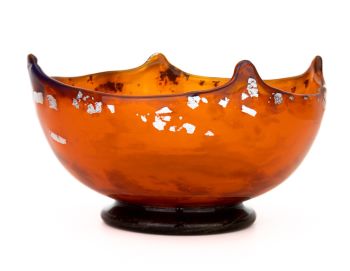
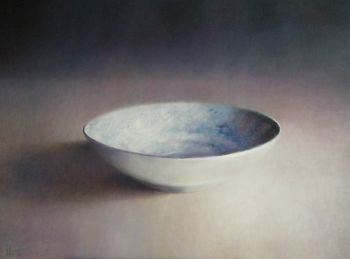
    This remarkable bowl was created by Johann Loetz Witwe and dates back to the early 20th century. With a generous body diameter of 21 cm (8.27 inches) and a height of 13.5 cm (5.31 inches), this is an impressive decorative object that reflects the transition from the Art Nouveau to the Art Deco era.

    The bowl is crafted in Ausführung 134, a technique introduced in 1914, at the onset of the First World War. This execution is based on the Titania technique, developed in 1905 as a response to the waning interest in iridescent glass. With Titania, Loetz introduced a new aesthetic by layering metallized glass threads over a base-colored glass and finishing it with a transparent glass coating. This process created a mysterious play of colors and a unique depth effect, giving the glasswork a refined and captivating appearance.

    In terms of color, the bowl features a stunning light blue base, combined with a deep blue-gray Titania layer. Unfortunately, photographs often fail to capture the true colors and nuances of the bowl, slightly understating its enchanting depth and play of colors.

    A distinctive feature of this bowl is the applied snake, crafted from cobalt blue glass. The graceful snake lies elegantly across the bowl, with carefully formed details such as a hand-shaped head and applied glass eyes. Additionally, the upper rim of the bowl is accentuated with a cobalt blue glass thread, further enhancing its refined appearance.

    As is customary for Loetz glass after 1902, the bowl is unsigned. After the First World War, Loetz introduced a new etched mark, “CZECHO-SLOVAKIA,” for their glassware, but this does not apply to this piece.

    This bowl combines artistic innovation and historical significance, making it a valuable object for both Art Nouveau enthusiasts and Loetz glass collectors.
  • Sobre artista

    A vidraria Loetz existiu em Klostermuhle, Áustria, por pouco mais de cem anos, começando em 1840. Mas seu apogeu foi durante a vida de Max Ritter Von Spaun, neto do original Johann Loetz que fundou a empresa.

    Von Spaun assumiu a empresa em 1879 e a dirigiu até 1908, um ano antes de sua morte. Ele foi auxiliado por Eduard Prochaska, seu especialista técnico, e juntos eles inventaram, projetaram e produziram uma série de novos e maravilhosos tipos de vidro, tirando várias patentes e ganhando prêmios em todas as maiores exposições mundiais durante a década de 1890 e os primeiros anos de o novo século.

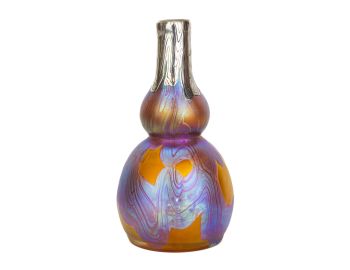
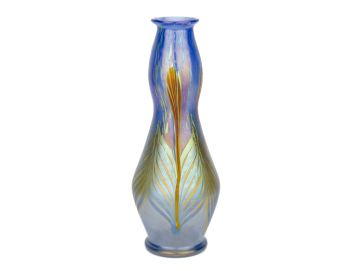
    A empresa Loetz estava entre os líderes em design Art Nouveau e especialmente em vidro de arte irridescente. O vidro "Papillon", como o vaso à esquerda, é às vezes conhecido hoje como vidro "manchado de óleo". Outro colorante favorito de Loetz era o vidro irradiado com trilhas puxadas, chamado de vidro "Fenômeno".

    Havia vasos irritados com fitas de cores metálicas enroladas na superfície, e muitos desenhos espetaculares com rastros aplicados de belas cores, ou simplesmente puxados para fora do corpo do vidro para formar alças ou decoração.

    Por volta de 1900, a empresa começou a colaborar com designers externos, e alguns grandes artistas criaram peças para Lotz, notavelmente Joseph Hofmann, Koloman Moser, Maria Kirchner e Hofstatter.

    Em 1908, Loetz foi adquirido pelo filho de Max Von Spaun, também chamado de Max, e embora tivesse dificuldades financeiras (indo à falência em 1911 e novamente em 1931), havia vários grandes designers cujo trabalho foi produzido por Loetz durante aqueles anos e através da arte período deco. Entre eles, Adolf Beckert e Michael Powolny.

Você está interessado em comprar esta obra de arte?