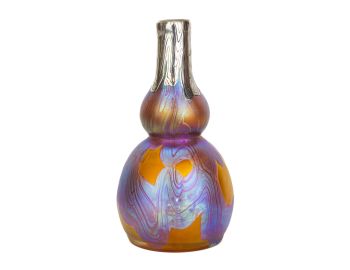
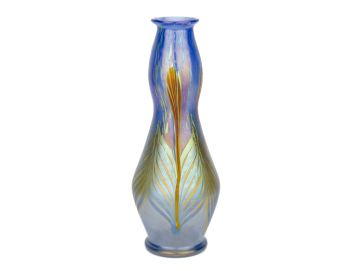
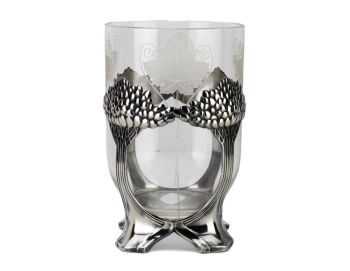
Johann Loetz Witwe – Phänomen Genre 1/473 vase by Johann Loetz (Lötz) Witwe Klostermühle

Johann Loetz Witwe – Phänomen Genre 1/473 vase 1901 - 1902

Johann Loetz (Lötz) Witwe Klostermühle

Copo
25 cm, ø 13 cm
ConditionExcellent
€ 5.950

Antiques Emporium

  • Sobre arte
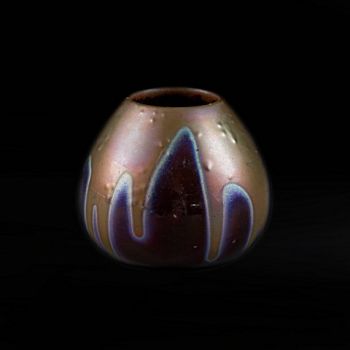
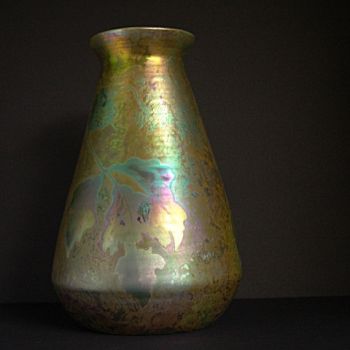
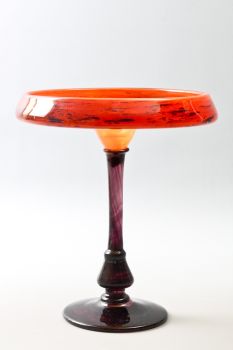
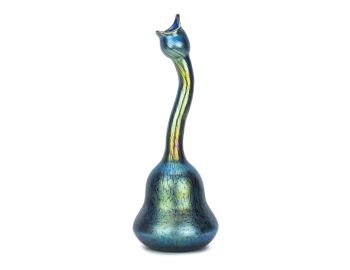
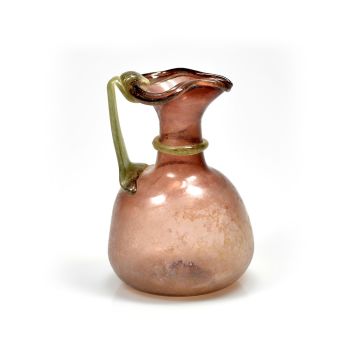
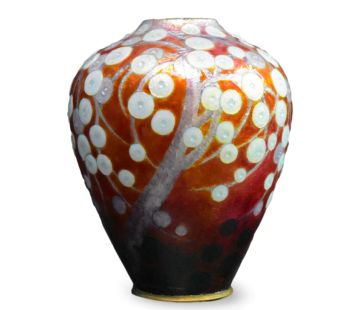
    This impressive vase by Johann Loetz Witwe, one of the most important producers of Jugendstil glass from Bohemia, is executed in Phänomen Genre 1/473 and blown in the refined ground color pink. The vase has an elegant calabash shape with a flat, folded rim, a form that lends itself perfectly to this Phänomen Genre.

    The lower section of the body is richly decorated with iridescent spots, beautifully distributed across the surface and shimmering in silver and purple hues. The rest of the surface is subtly covered with a light silver iridescence, which enhances the depth and vibrancy of the pink ground color.

    The vase measures 25 cm in height and bears the signature “Loetz Austria” in the pontil. The production drawing of this specific model has unfortunately not been preserved, most likely lost during the major fire in the Loetz factory around 1902.

    Due to the exceptional way in which this glass interacts with light, it is nearly impossible to capture the true color of the vase in photographs. The pink ground color shifts dramatically depending on the angle and intensity of the light, constantly revealing new aspects of its character and play of colors. Moreover, the iridescent hues appear far stronger and more vibrant in reality than visible in the photos, making the object all the more impressive when viewed in person.

    Loetz in context
    The glassworks Johann Loetz Witwe, located in Klostermühle (Bohemia), stood at the very pinnacle of European glass art around 1900. The company gained international acclaim for its innovative iridescent glass, in which metallic sheen and deep colors are harmoniously combined. Their Phänomen Genre décors, such as this example, rank among the most iconic creations and display a masterful balance between artistic design and technical innovation.

    At the 1900 Paris World Exhibition, Loetz was internationally recognized alongside Louis Comfort Tiffany, firmly establishing its reputation as a leading producer of Art Nouveau glass. Today, Loetz objects are represented in major museum collections such as the MAK in Vienna and the Metropolitan Museum of Art in New York, and they belong to the most coveted pieces of Jugendstil glass on the art market.
  • Sobre artista

    A vidraria Loetz existiu em Klostermuhle, Áustria, por pouco mais de cem anos, começando em 1840. Mas seu apogeu foi durante a vida de Max Ritter Von Spaun, neto do original Johann Loetz que fundou a empresa.

    Von Spaun assumiu a empresa em 1879 e a dirigiu até 1908, um ano antes de sua morte. Ele foi auxiliado por Eduard Prochaska, seu especialista técnico, e juntos eles inventaram, projetaram e produziram uma série de novos e maravilhosos tipos de vidro, tirando várias patentes e ganhando prêmios em todas as maiores exposições mundiais durante a década de 1890 e os primeiros anos de o novo século.

    A empresa Loetz estava entre os líderes em design Art Nouveau e especialmente em vidro de arte irridescente. O vidro "Papillon", como o vaso à esquerda, é às vezes conhecido hoje como vidro "manchado de óleo". Outro colorante favorito de Loetz era o vidro irradiado com trilhas puxadas, chamado de vidro "Fenômeno".

    Havia vasos irritados com fitas de cores metálicas enroladas na superfície, e muitos desenhos espetaculares com rastros aplicados de belas cores, ou simplesmente puxados para fora do corpo do vidro para formar alças ou decoração.

    Por volta de 1900, a empresa começou a colaborar com designers externos, e alguns grandes artistas criaram peças para Lotz, notavelmente Joseph Hofmann, Koloman Moser, Maria Kirchner e Hofstatter.

    Em 1908, Loetz foi adquirido pelo filho de Max Von Spaun, também chamado de Max, e embora tivesse dificuldades financeiras (indo à falência em 1911 e novamente em 1931), havia vários grandes designers cujo trabalho foi produzido por Loetz durante aqueles anos e através da arte período deco. Entre eles, Adolf Beckert e Michael Powolny.

Você está interessado em comprar esta obra de arte?

Artwork details