Johann Loetz Witwe – Phänomen Genre 8065 – Thea by Johann Loetz (Lötz) Witwe Klostermühle

Johann Loetz Witwe – Phänomen Genre 8065 – Thea 1899 - 1900

Johann Loetz (Lötz) Witwe Klostermühle

Copo
18 ⨯ 4 cm, ø 5 cm
ConditionExcellent
Preço em pedido

Antiques Emporium

  • Sobre arte
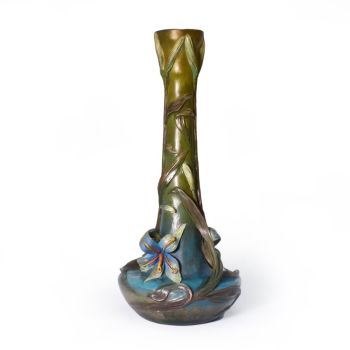
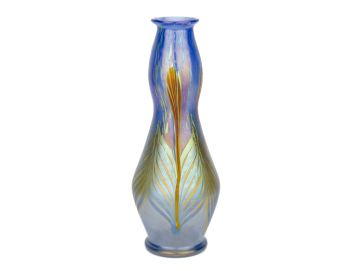
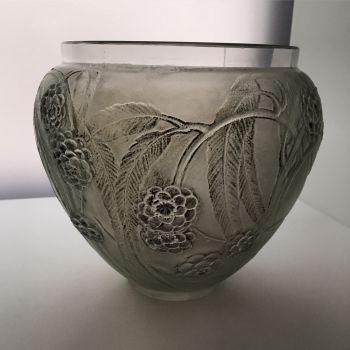
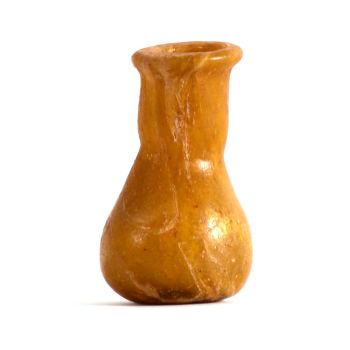
    This elegant Phänomen Genre 8065 Art Nouveau vase, crafted by Johann Loetz Witwe, was designed in 1899, just before the great success of the Paris Exposition Universelle in 1900. During this crucial period, Max Ritter von Spaun and Eduard Prochaska were fully engaged in refining innovative glass techniques and developing groundbreaking designs. Their goal was to elevate the iridescent glass, which they had been producing since 1898, to an even higher level and to firmly establish Loetz as a pioneer in the world of glass art.

    This vase is a stunning example of the artistic and technical innovations that Johann Loetz Witwe introduced around 1899. The combination of the subtle color, the intricate glass thread decoration, and the refined iridescence makes this piece an exceptionally rare and highly sought-after object in the world of Art Nouveau glass art.

    Johann Loetz Witwe – Phänomen Genre 8065 – Thea
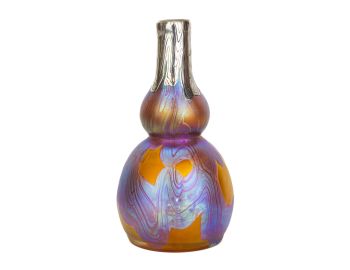
    This vase is blown in the subtle and refined base color “Thea,” a soft hue that beautifully enhances the iridescence and decoration. The execution belongs to the rare Phänomen Genre 8065, which debuted in 1899. Remarkably, this is one of the few Phänomen Genre decorations produced under the same production number, 8065, further emphasizing the exclusivity of this decor.

    The surface of the vase is adorned with a dense pattern of silver-blue glass threads that gracefully swirl across the body. The upper section is further enriched with applied silver-blue bands, which are pulled downward into elegant, elongated droplet shapes. This delicate and highly refined decoration creates a dynamic and flowing effect, characteristic of the innovative aesthetics of Loetz glass art at the turn of the century.

    The combination of the subtle base color “Thea,” the intricate glass thread decoration, and the refined iridescence makes this piece an exceptionally rare and highly sought-after object in the world of Art Nouveau glass art. The decorative technique, where silver-yellow glass threads elegantly weave across the surface and extend into elongated droplet shapes, reflects the innovative spirit of Loetz during this period.

    Signature
    The vase is in excellent condition and is signed with a wheel-engraved “Loetz Austria” mark. This signature was first introduced just before the turn of the century, during a period when Loetz began systematically marking their works for the international market. As Loetz gained increasing global recognition, a more distinctive signature became necessary, since the earlier marking with Max Ritter von Spaun’s family crest was not directly associated with the glassworks.

    Additionally, the original spelling “Lötz” with an umlaut proved confusing for languages that do not use this diacritical mark. To avoid misunderstandings and enhance brand recognition, the standardized signature “Loetz Austria” was introduced, specifically intended for export markets.
  • Sobre artista

    A vidraria Loetz existiu em Klostermuhle, Áustria, por pouco mais de cem anos, começando em 1840. Mas seu apogeu foi durante a vida de Max Ritter Von Spaun, neto do original Johann Loetz que fundou a empresa.

    Von Spaun assumiu a empresa em 1879 e a dirigiu até 1908, um ano antes de sua morte. Ele foi auxiliado por Eduard Prochaska, seu especialista técnico, e juntos eles inventaram, projetaram e produziram uma série de novos e maravilhosos tipos de vidro, tirando várias patentes e ganhando prêmios em todas as maiores exposições mundiais durante a década de 1890 e os primeiros anos de o novo século.
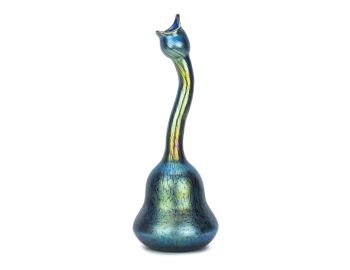
    A empresa Loetz estava entre os líderes em design Art Nouveau e especialmente em vidro de arte irridescente. O vidro "Papillon", como o vaso à esquerda, é às vezes conhecido hoje como vidro "manchado de óleo". Outro colorante favorito de Loetz era o vidro irradiado com trilhas puxadas, chamado de vidro "Fenômeno".

    Havia vasos irritados com fitas de cores metálicas enroladas na superfície, e muitos desenhos espetaculares com rastros aplicados de belas cores, ou simplesmente puxados para fora do corpo do vidro para formar alças ou decoração.

    Por volta de 1900, a empresa começou a colaborar com designers externos, e alguns grandes artistas criaram peças para Lotz, notavelmente Joseph Hofmann, Koloman Moser, Maria Kirchner e Hofstatter.

    Em 1908, Loetz foi adquirido pelo filho de Max Von Spaun, também chamado de Max, e embora tivesse dificuldades financeiras (indo à falência em 1911 e novamente em 1931), havia vários grandes designers cujo trabalho foi produzido por Loetz durante aqueles anos e através da arte período deco. Entre eles, Adolf Beckert e Michael Powolny.

Você está interessado em comprar esta obra de arte?