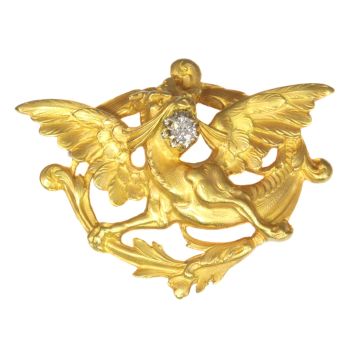
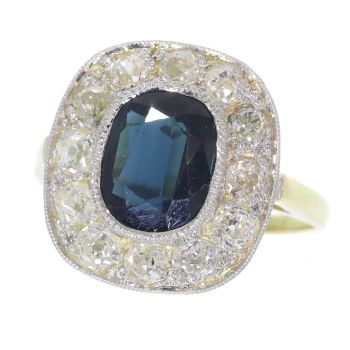
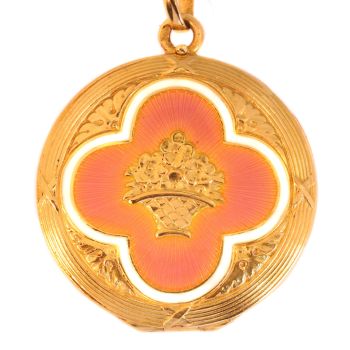
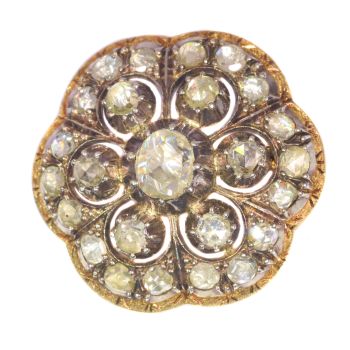
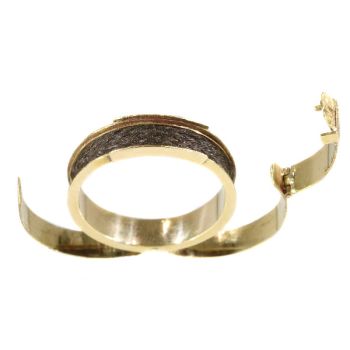
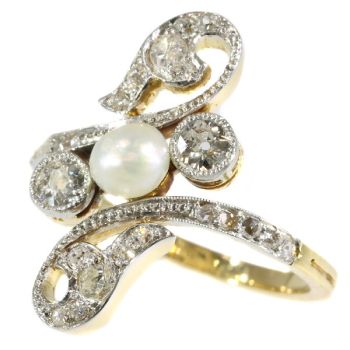
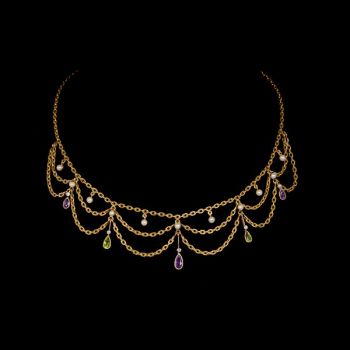
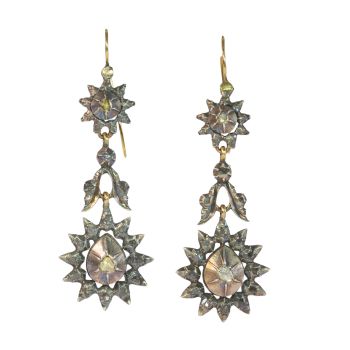
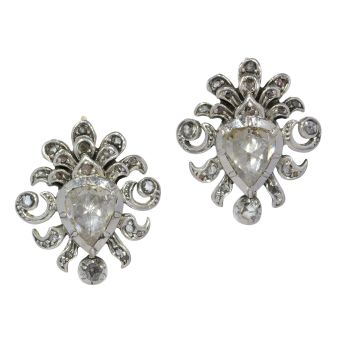
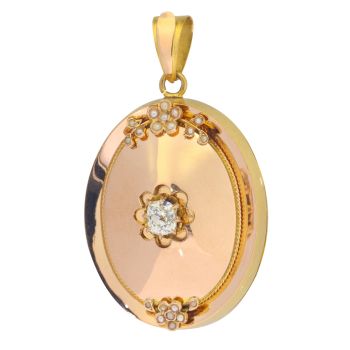
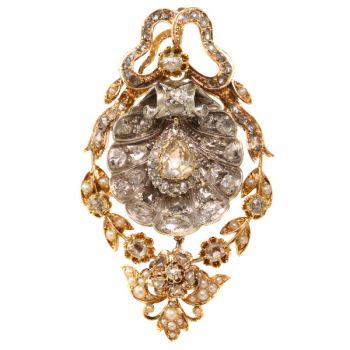
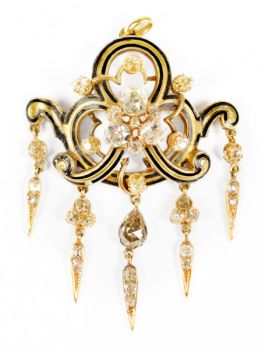
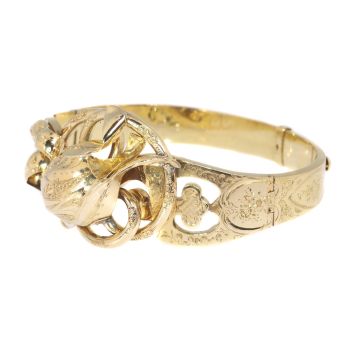
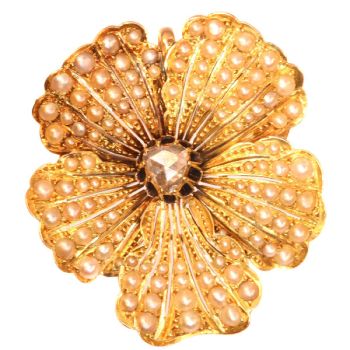
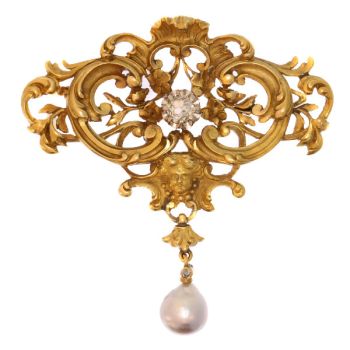
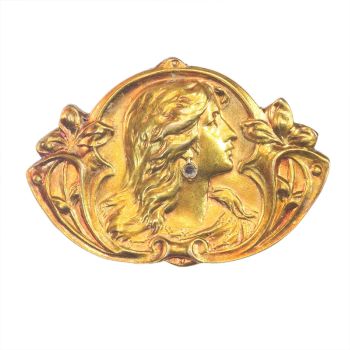
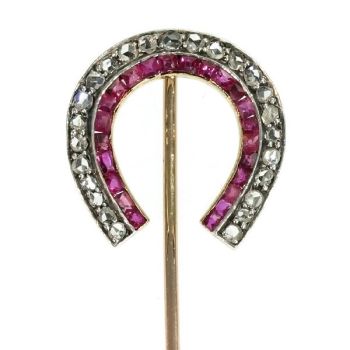
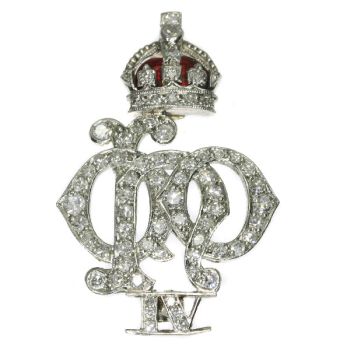
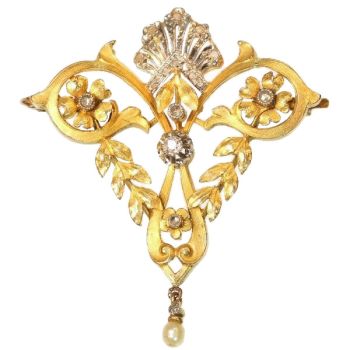
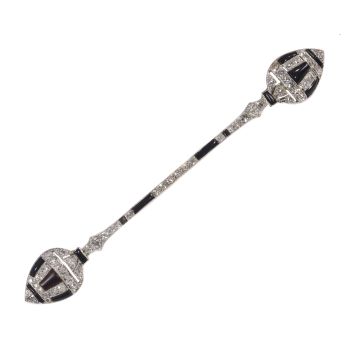
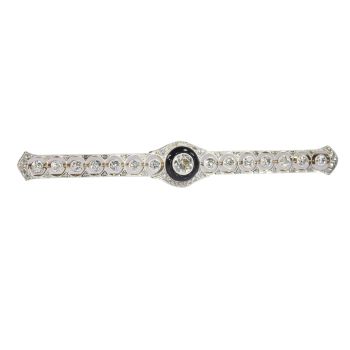
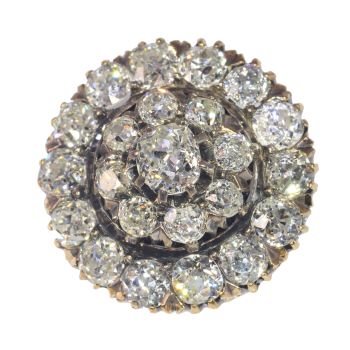
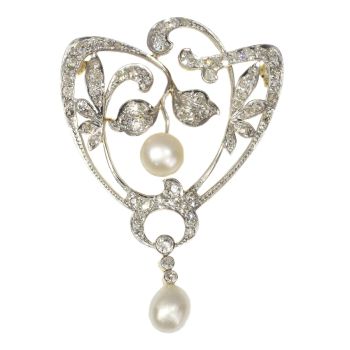
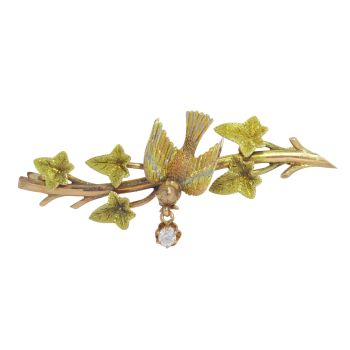
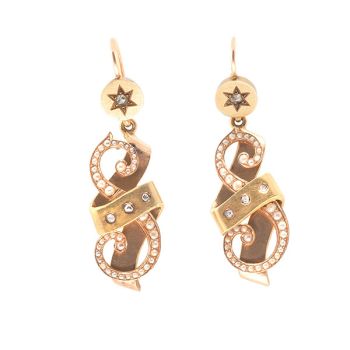
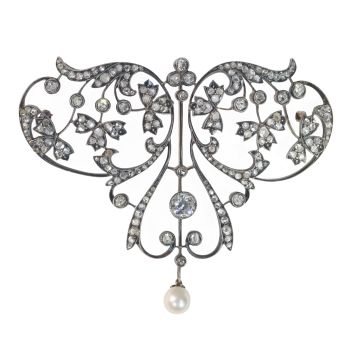
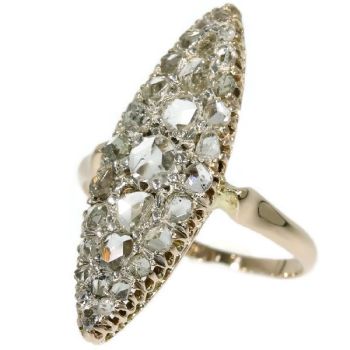
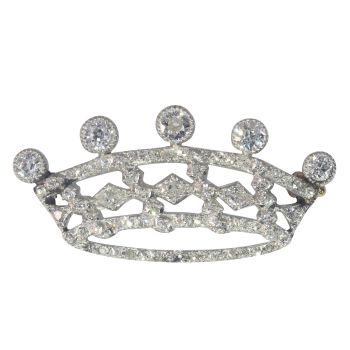
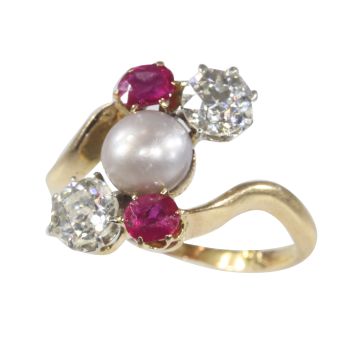
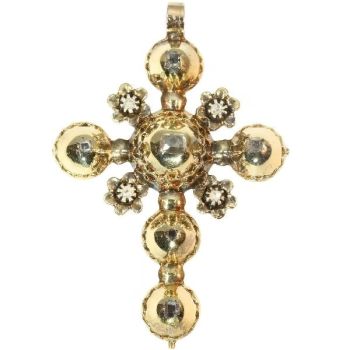
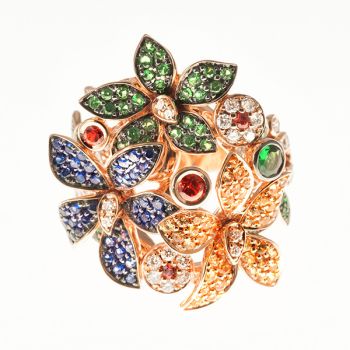
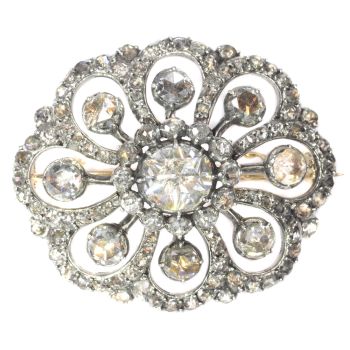
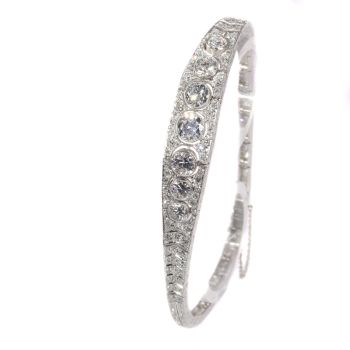
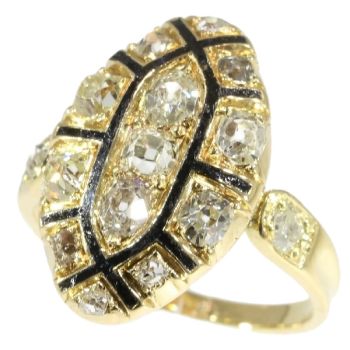
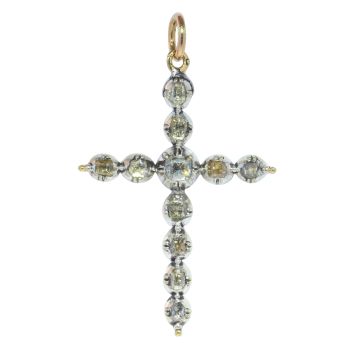
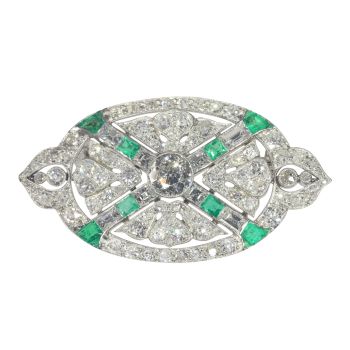
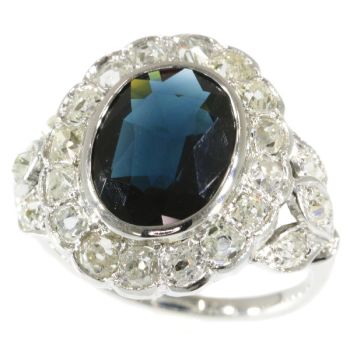
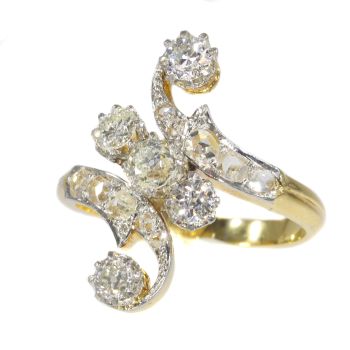
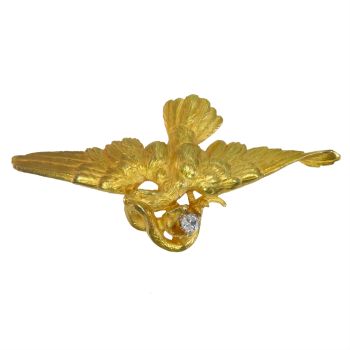
Holding this late Victorian French brooch, one is immediately struck by the impeccable craftsmanship and the exquisite quality of the stones. The precision-cut intense green emeralds, along with the uniquely shaped sapphires and colourless diamonds,manifest a remarkable standard of artistry. This piece is more than just jewellery; it's a tangible connection to a bygone era, igniting a profound "must-have" emotion, especially resonant with collectors of antique jewels. The brooch's intricate designand vibrant colours not only capture the eye but also the heart, embodying a timeless allure that transcends mere aesthetic appeal.
Antique jewelry object group Fleur-de-Lis Splendour: Antique French Brooch with Intense Green Essence
Condition very good condition more info on our condition scale
Country of origin France
Style Victorian - Victorian decorative arts refers to the style of decorative arts during the Victorian era. The Victorian era is known for its eclectic revival and interpretation of historic styles and the introduction of cross-cultural influences from themiddle east and Asia in furniture, fittings, and Interior decoration. Victorian design is widely viewed as having indulged in a regrettable excess of ornament. The Arts and Crafts movement, the aesthetic movement, Anglo-Japanese style, and Art Nouveaustyle have their beginnings in the late Victorian era. See also: Victorian more info on styles
Style specifics The Late or Aesthetic Victorian Period - Experts divide the reign of Queen Victoria, also called The Victorian era (1837-1901) into three periods of about twenty years each; The Romantic Victorian Period (1837 - 1860), The Grand Victorian Period(1860 - 1880), and the Late or Aesthetic Victorian Period (1880 - 1901).
We consider this to be of The Late or Aesthetic Victorian Period.
Jewelry of this period is changing back from heavy to more smaller, romantic pieces with often whimsical motifs. Jewelers using diamonds and bright gemstones in elaborated and fine feminine pieces.
Period ca. 1890 Events & facts of this era, poetry of this era, fashion of this era.
Source of inspiration Mother Nature
Theme Fleur-de-lis - The fleur-de-lis (also spelled fleur-de-lys) is a stylized lily (in French, fleur means "flower", and lis means "lily") that is used as a decorative design or symbol. The fleur-de-lis has been used in the heraldry of numerous European nations, but is particularly associated with France, notably during its monarchical period. (from: Wikipedia)
Material 18K yellow gold (touchstone tested) more info on precious metals
Diamonds Nine old brilliant cut diamondswith an estimated weight of ± 0.12ct colour and clarity F/G, vs/si All diamond weights, color grades and clarity are approximate since stones are not removed from their mounts to preserve the integrity of the setting. All diamonds we offer are screened by the I.J.G.C. for whether they are natural or synthetic, and all diamonds in this jewel are 100% guaranteed to be natural.
Precious stones Nine sapphires and 72intense green emeralds It is a very common practice to treat gemstones to intensify their clarity or colour. The item in question has not been tested in this regard.
Birthstones Diamond is the birthstone (or month stone) for April, sapphire for September and emerald for May. more info on birthstones
Hallmarks The French control mark for 18K gold representing an eagle's head that was in use in France from about 1838. more info on hallmarks
Dimensions 2,67 cm (1,05 inch) x 2,36 cm (0,93 inch) see picture with a ruler in millimeters and inches
Weight 5,00 gram (3,21 dwt)
Adin Reference Nº 23167-0365
Copyright photography Adin, fine antique jewellery
Additional information our latest acquisitions jewelry glossary wall of fame visit us in Antwerp subscribe to our mailinglist
Het kan voorkomen dat een kunstenaar of maker onbekend is.
Voor sommige werken is het niet te bepalen door wie het gemaakt is of dat het is gemaakt door (een groep) ambachtslieden. Voorbeelden zijn beelden uit de Oudheid, meubels, spiegels of handtekeningen die vaak niet duidelijk of leesbaar zijn. Maar ook sommige werken zijn helemaal niet gesigneerd.
Ook kunt u de volgende beschrijving vinden:
•"Toegeschreven aan …." waarschijnlijk een werk van de kunstenaar maar niet zeker of gedeeltelijk
•“Atelier van ….” of werkplaats van” een werk uitgevoerd in het atelier of atelier van de kunstenaar, eventueel onder zijn toezicht
•“Cirkel van ….” een werk uit de periode van de kunstenaar die zijn invloed laat zien, nauw verbonden met de kunstenaar maar niet noodzakelijkerwijs zijn leerling
•“Stijl van ….” of “Volger van ….” een werk uitgevoerd in de stijl van de kunstenaar, maar niet noodzakelijk door een leerling; kan eigentijds of bijna eigentijds zijn
•“Wijze van ….” een werk in de stijl van de kunstenaar maar van latere datum
•"Na …." een kopie (van welke datum dan ook) van een werk van de kunstenaar
•“Getekend…”, “Gedateerd….” of “Ingeschreven” dan is het werk gesigneerd/ gedateerd/ ingeschreven door de kunstenaar. De toevoeging van een vraagteken duidt op een element van twijfel
•"Met handtekening ...", "Met datum ...", "Met opschrift..." of “Draagt signatuur/datum/opschrift” dan is de handtekening/datum/opschrift toegevoegd door iemand anders dan de kunstenaar