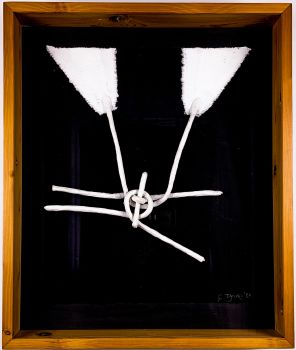
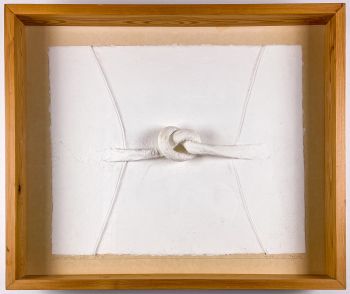
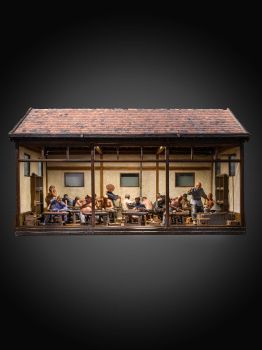
Sculptured model of a smoked Papua Mummie, papier mâché, 20th C by Onbekende Kunstenaar

Sculptured model of a smoked Papua Mummie, papier mâché, 20th C 1990

Onbekende Kunstenaar

Papier-maché
76 ⨯ 40 ⨯ 60 cm
ConditionVery good
Prijs op aanvraag

Spectandum Gallery

  • Over kunstwerk
    Burial practices in New Guinea, as elsewhere in the world, differ across cultures. In some traditions, the way a body is treated after death is believed to directly impact the soul's journey.In Irian Jaya (the Indonesian region of Papua New Guinea), five tribes have a unique tradition of mummification: the Mek tribe of the Bintang Mountains, the Dani tribe from the Baliem Valley, the Moni tribe in Intan Jaya, the Yali tribe in Kurima, and the Mee tribe in Dogiyai. Unlike the well-known Egyptian mummies, these mummies are not preserved in coffins or wrapped in bandages, but are instead kept intact, with a distinctive dark coloration.Mummification is reserved for individuals of great importance within these tribes, such as tribal leaders, war commanders, or highly respected figures. The process involves several stages, beginning with the selection of tribe members to handle the mummification. Firewood is gathered, and a traditional Papuan house known as a honai is prepared for the ceremony. The body is then smoked over a fire, a method that helps preserve it.After smoking, a series of rituals are performed, during which the mummy is adorned with feathers, pig tusks, and a traditional gourd worn as a covering. The process concludes with a stone-burning feast known as barapen.Papuan mummies are typically positioned in a sitting posture, a reflection of ancient beliefs that associate this stance with the fetal position, symbolizing rebirth. To date, six mummies have been documented in Papua: four from the Dani tribe, one from the Yali tribe, and one from the Moni tribe. Each tribe has specific names for their mummies, such as the Kurulu, Pumo, Araboda, and Jiwika mummies from the Dani people of Wamena.These mummies are regarded as symbols of blessings for the community. The practice of mummification is seen as a way to honor and preserve the memory of esteemed individuals while maintaining cultural traditions.
  • Over kunstenaar

    Het kan voorkomen dat een kunstenaar of maker onbekend is.

    Voor sommige werken is het niet te bepalen door wie het gemaakt is of dat het is gemaakt door (een groep) ambachtslieden. Voorbeelden zijn beelden uit de Oudheid, meubels, spiegels of handtekeningen die vaak niet duidelijk of leesbaar zijn. Maar ook sommige werken zijn helemaal niet gesigneerd.

    Ook kunt u de volgende beschrijving vinden:

    •"Toegeschreven aan …." waarschijnlijk een werk van de kunstenaar maar niet zeker of gedeeltelijk

    •“Atelier van ….” of werkplaats van” een werk uitgevoerd in het atelier of atelier van de kunstenaar, eventueel onder zijn toezicht

    •“Cirkel van ….” een werk uit de periode van de kunstenaar die zijn invloed laat zien, nauw verbonden met de kunstenaar maar niet noodzakelijkerwijs zijn leerling

    •“Stijl van ….” of  “Volger van ….” een werk uitgevoerd in de stijl van de kunstenaar, maar niet noodzakelijk door een leerling; kan eigentijds of bijna eigentijds zijn

    •“Wijze van ….” een werk in de stijl van de kunstenaar maar van latere datum

    •"Na …." een kopie (van welke datum dan ook) van een werk van de kunstenaar

    •“Getekend…”,  “Gedateerd….”  of  “Ingeschreven” dan is het werk gesigneerd/ gedateerd/ ingeschreven door de kunstenaar. De toevoeging van een vraagteken duidt op een element van twijfel

    •"Met handtekening ...", "Met datum ...", "Met opschrift..." of “Draagt signatuur/datum/opschrift” dan is de handtekening/datum/opschrift toegevoegd door iemand anders dan de kunstenaar

Bent u geïnteresseerd om dit kunstwerk te kopen?

Artwork details