A Chinese Lacquered Wooden Figure Of Li Tieguai, Qing Dynasty, 18th/19th C. by Artista Desconhecido

A Chinese Lacquered Wooden Figure Of Li Tieguai, Qing Dynasty, 18th/19th C. 1701 - 1850

Artista Desconhecido

Madeira
31 ⨯ 15 ⨯ 8 cm
ConditionGood
€ 1.200

Menken Works of Art

  • Sobre arte
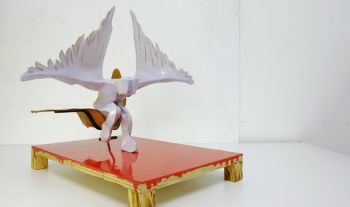
    A lacquered wood figure of Li Tieguai.
    Qing dynasty, 17th/18th century.

    The bearded emaciated standing immortal with one raised leg is carved holding in his left hand his crutch and in his right a double gourd, his flowing robes cascading over his shoulders and legs in unrestrained pleats, secured by a ribbon tied below his lean angular chest and complemented by a belt of leaves, the partially bald head with long hair flowing along the sides and back.

    The style of carving is reminiscent of Chinese Ming bronzes and Blanc de Chine figures from the late Ming, for instance compare with a Ming bronze figure of Li Tieguai in The Cleveland Museum of Art, museum number 1973.158.

    Height 31 cm, width 15 cm, depth 8 cm.

    Provenance:
    From a private collection in Amsterdam, The Netherlands

    About Li Tieguai:
    Li Tieguai is one of the legendary Eight Immortals of Daoist tradition, revered for his paradoxical appearance and profound spiritual power. Often depicted as a ragged beggar with an iron crutch and a gourd, he embodies the idea that true enlightenment transcends physical form and social status.

    According to legend, Li was once a handsome scholar who practiced meditation so deeply that his spirit could leave his body. During one such journey, his body was mistakenly cremated, forcing his spirit to inhabit the body of a lame beggar. Accepting this fate, Li embraced humility and compassion, using his magical gourd to dispense medicine and aid the sick and poor.

    In Chinese art and folklore, Li Tieguai symbolizes healing, resilience, and the transformative power of inner virtue over outward appearance.

    Worldwide registered and insured shipping.

    Inv. No: MW383
  • Sobre artista

    Pode acontecer que um artista ou criador seja desconhecido.

    Algumas obras não devem ser determinadas por quem são feitas ou são feitas por (um grupo de) artesãos. Exemplos são estátuas dos tempos antigos, móveis, espelhos ou assinaturas que não são claras ou legíveis, mas também algumas obras não são assinadas.

    Além disso, você pode encontrar a seguinte descrição:

    •"Atribuído a …." Na opinião deles, provavelmente uma obra do artista, pelo menos em parte

    • “Estúdio de…” ou “Oficina de” Em sua opinião um trabalho executado no estúdio ou oficina do artista, possivelmente sob sua supervisão

    • "Círculo de ..." Na opinião deles, uma obra da época do artista mostrando sua influência, intimamente associada ao artista, mas não necessariamente seu aluno

    •“Estilo de…” ou “Seguidor de…” Na opinião deles, um trabalho executado no estilo do artista, mas não necessariamente por um aluno; pode ser contemporâneo ou quase contemporâneo

    • "Maneira de ..." Na opinião deles, uma obra no estilo do artista, mas de data posterior

    •"Depois …." Na opinião deles uma cópia (de qualquer data) de uma obra do artista

    • “Assinado…”, “Datado…” ou “Inscrito” Na opinião deles, a obra foi assinada/datada/inscrita pelo artista. A adição de um ponto de interrogação indica um elemento de dúvida

    • "Com assinatura ….”, “Com data ….”, “Com inscrição ….” ou “Tem assinatura/data/inscrição” na opinião deles a assinatura/data/inscrição foi adicionada por outra pessoa que não o artista

Você está interessado em comprar esta obra de arte?
Artwork details

Categoria
Estilo
Material e Técnica
Cor