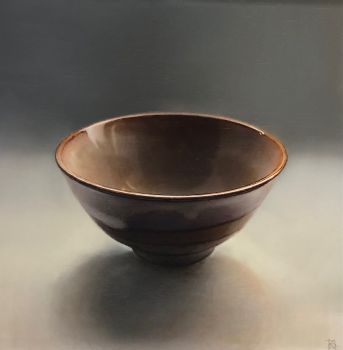
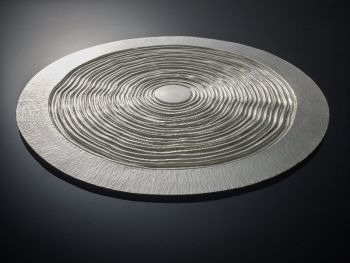
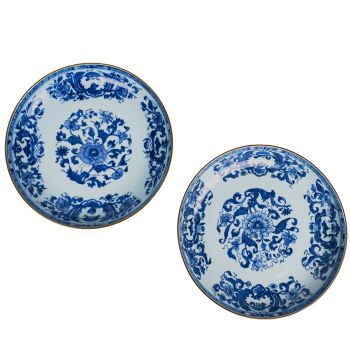
A unique glazed stoneware deep dish – Gustavsberg Sweden by Stig Lindberg

A unique glazed stoneware deep dish – Gustavsberg Sweden 1974

Stig Lindberg

PierreglaçageGrèsPeindre
6 cm, ø 24 cm
ConditionVery good
€ 750

Van Kerkhoff Art

  • Sur l'oeuvre d'art
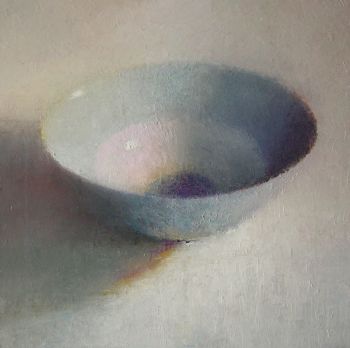
    A unique glazed stoneware deep dish. Handthrown by Stig Lindberg at the Swedish ceramics studio Gustavsberg in 1974. Fully marked.


    About Stig Lindberg
    Stig Lindberg (1916–1982) was a Swedish designer and ceramic artist whose work spanned a wide range of disciplines, from ceramics and illustration to industrial design and textiles. He is known for blending playfulness with functionality, and for helping to define Swedish design in the postwar era.

    Born in Umeå, Sweden, Lindberg studied at the University College of Arts, Crafts and Design (Konstfack) in Stockholm. In the late 1930s, he joined the Gustavsberg porcelain factory, where he worked under Wilhelm Kåge. After World War II, Lindberg became one of the factory’s leading designers and eventually took over as artistic director.

    Lindberg’s ceramics ranged from everyday tableware to one-off art pieces. He was especially known for his imaginative, sometimes whimsical designs, as well as for his ability to balance mass production with artistic expression. In addition to ceramics, he designed textiles for Nordiska Kompaniet (NK), illustrated children’s books, and created iconic industrial designs, including radio and television casings.

    His work was widely exhibited during his lifetime and attracted international attention. Today, his ceramics and other designs are included in the collections of several major museums, such as the Nationalmuseum in Stockholm, the Röhsska Museum in Gothenburg, the Victoria and Albert Museum in London, and the Cooper Hewitt Smithsonian Design Museum in New York.

    Marked
    Marked underneath the base: Stig L – G (Gustavsberg) Studio Hand – \ (1974)

    Execution
    Gustavsberg, Sweden 1974

    Condition
    This dish is in very good condition. No cracks or chips.

    Literature
    Mel Bryans – The Design Encyclopedia

    Dimensions
    Height 6,5 cm
    Diameter 24 cm
  • Sur l'artiste

    Arne Jacobsen (1902–1971) fut l'un des architectes et designers danois les plus influents, reconnu pour son approche holistique qui unissait harmonieusement l'architecture, le mobilier et le design produit en une vision cohérente.

    Né à Copenhague, Jacobsen a étudié l'architecture à l'Académie royale des beaux-arts du Danemark, où ses idées modernistes se sont rapidement imposées. Profondément inspiré par Le Corbusier et le mouvement Bauhaus, il a cherché à allier fonctionnalité et simplicité, donnant naissance à un modernisme scandinave distinctif, caractérisé par la clarté, les proportions et l'élégance.

    L'héritage architectural de Jacobsen comprend certains des bâtiments les plus emblématiques du Danemark, dont le SAS Royal Hotel de Copenhague (1960), souvent considéré comme le premier « hôtel design » au monde. Pour ce projet, il a entièrement conçu l'ensemble, de la façade et du mobilier aux couverts et poignées de porte, incarnant ainsi sa philosophie du « design total ».

    En tant que designer, Jacobsen est devenu une figure mondiale du style moderne. Ses chaises Egg Chair (1958), Swan Chair et Series 7 Chair sont des pièces intemporelles qui continuent de façonner les intérieurs contemporains du monde entier. Chacune reflète sa capacité à allier formes organiques et ingénierie de précision : beauté et utilité en parfait équilibre.

    Souvent décrit comme un perfectionniste, le travail de Jacobsen rayonne de chaleur et d'humanité. Son héritage perdure non seulement dans les paysages urbains danois, mais aussi dans les maisons et les bureaux du monde entier, où ses créations demeurent des emblèmes de l'élégance, de l'innovation et de la sobriété scandinaves.

Êtes-vous intéressé par l'achat de cette oeuvre?