ynthetic Construction F6 by Joost Baljeu

ynthetic Construction F6 1960 - 1980

Joost Baljeu

PlexiglasTirage photographique
55 ⨯ 16 ⨯ 16 cm
ConditionExcellent
€ 4.950 - 6.950

The Millen House

  • Sur l'oeuvre d'art
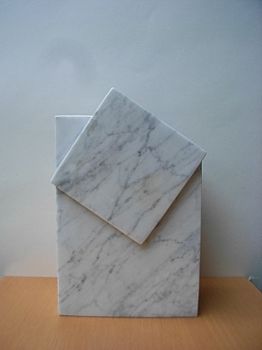
    Joost Baljeu geometric plexiglass sculpture — “Synthetic Construction F6,” design 1967, produced as Multiple Series I in 1975, a rare editioned constructivist work (no. 11/25).

    This refined geometric sculpture (55 × 16 × 16 cm) is part of Joost Baljeu’s important Synthetic Constructions, a series in which he translated the principles of postwar Constructivism into spatial, modular forms using industrial materials. Synthetic Construction F6 is built from interlocking planes of translucent and opaque plexiglass, creating shifting light effects and a dynamic vertical rhythm. The work exemplifies Baljeu’s exploration of colourless architecture in space, where the sculpture’s form changes subtly as the viewer moves around it. Produced in 1975 as part of Multiple Series I, this piece is numbered 11/25 and bears the artist’s signature underneath, accompanied by the original label.

    Condition is excellent, with clean surfaces and only minimal age-appropriate traces consistent with plexiglass works from the period. The structure is stable, edges remain crisp, and the base is original.

    About the Artist
    Joost Baljeu (1925–1991) was a key figure in Dutch Constructivism and a central contributor to postwar geometric abstraction. His work appears in major museum collections including the Stedelijk Museum Amsterdam, Kröller-Müller Museum, and international institutions focused on constructivist and concrete art.

    A rare, editioned Baljeu multiple — an essential object for collectors of postwar geometric abstraction.
  • Sur l'artiste

    Joost Baljeu (Middelbourg, 1er novembre 1925 – Amsterdam, 1er juillet 1991) était un artiste néerlandais majeur, reconnu pour ses sculptures constructivistes et ses peintures géométriques abstraites. Il s'inscrivait dans le mouvement international prônant la synthèse de l'art et de l'architecture, inspiré par De Stijl et les idéaux du modernisme. Son œuvre explore la construction spatiale, la couleur et la forme, en privilégiant les structures modulaires qui abolissent la frontière entre objet d'art et élément architectural.

    À partir des années 1950, Baljeu développe ses constructions spatiales emblématiques en acier et panneaux colorés, créant une tension visuelle entre volumes ouverts et fermés. Son art se caractérise par des lignes rythmiques, des géométries rigoureuses et des contrastes de couleurs éclatants, invitant le spectateur à une expérience dynamique de l'image dans l'espace.

    Joost Baljeu a œuvré sur la scène internationale comme artiste, écrivain et enseignant. Il a notamment enseigné à la Rijksakademie d'Amsterdam et publié des textes influents sur l'histoire et la théorie de l'art, notamment sur le constructivisme et De Stijl. Ses œuvres figurent dans les collections de grands musées, dont le Stedelijk Museum d'Amsterdam, le Kunstmuseum de La Haye, le Kröller-Müller Museum, ainsi que dans diverses institutions artistiques internationales. De grandes sculptures de Baljeu sont encore visibles aujourd'hui dans l'espace public, aux Pays-Bas comme à l'étranger.

    Par son approche novatrice de l'art abstrait et sa vision de l'art dans l'environnement bâti, Joost Baljeu a exercé une influence durable sur des générations d'artistes et de designers. Son œuvre demeure une référence essentielle dans l'histoire du constructivisme international et de l'art moderne néerlandais.

Êtes-vous intéressé par l'achat de cette oeuvre?